
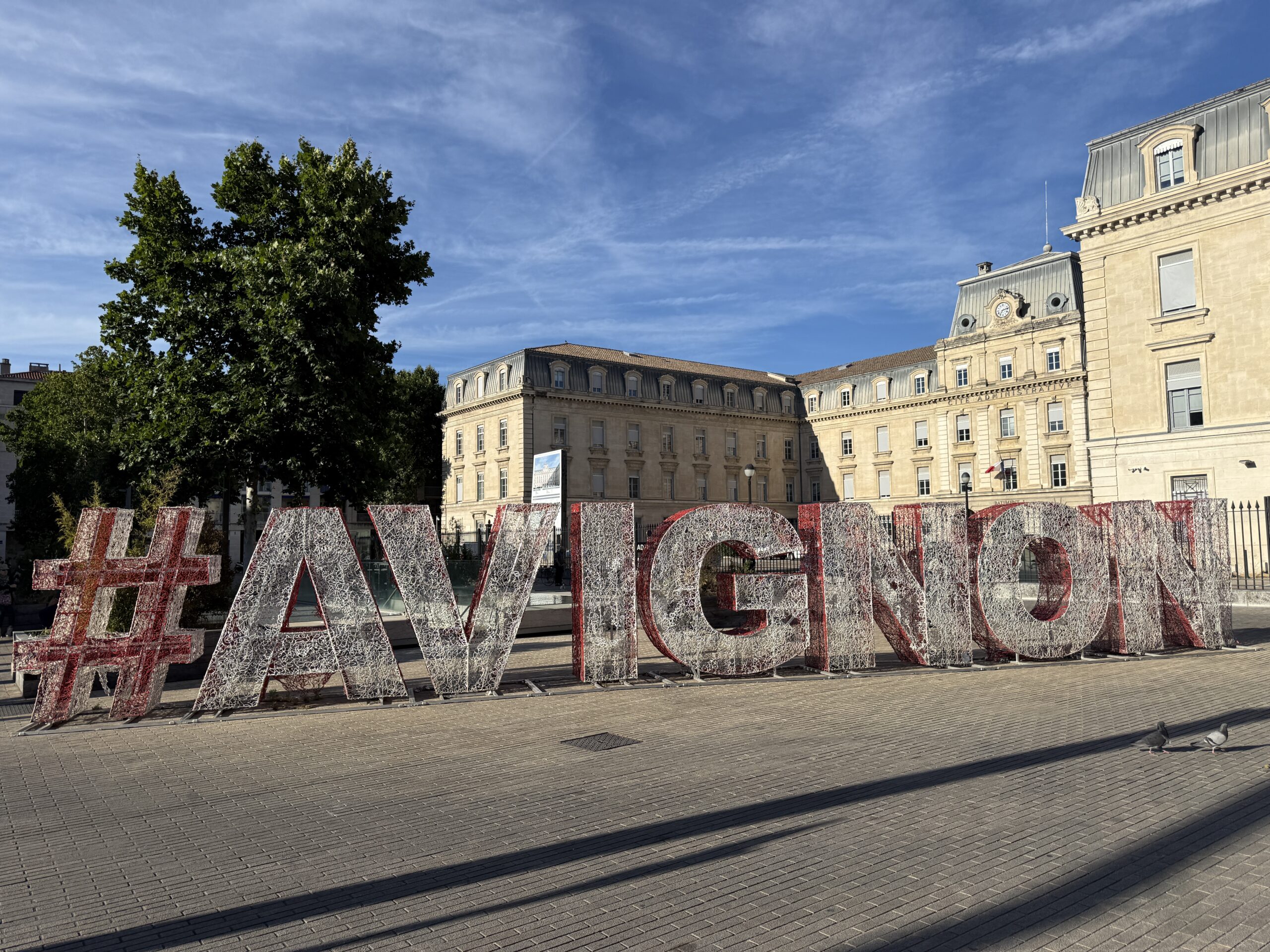
After an exciting journey in a BlaBlaCar, I safely made it to my hotel in Avignon. Avignon is in the Provence region of France, but the reason I wanted to go was because for a while, the Popes moved shop from Italy and set themselves up in Avignon.
BlaBlaCar
I feel I should explain what a BlaBlaCar is and why I know this. France is known for their train disruptions and a strike got me. With all trains shut down and the busses full, I had to look into alternatives. Enter: BlaBlaCar. I created an account and put in that I wanted to go from Carcassonne to Avignon. The app showed me a list of people who had said they were driving that route or a nearby route and had space in their car. I picked a female driver with great reviews and booked it.
The next day I showed up at a random parking lot. A little car pulled up, a guy got out and I took his seat. Inside the car were the driver, me, and two other dudes. We pulled up to a Burger King in another town and the front seat guy left and a new guy who was lurking nearby climbed aboard. It was so strange, but kinda funny. I was next and hopped out of the car in Avignon and the BlaBlaCar zipped off. Ha! I’m pleased to report that if I ever do BlaBlaCar again, I have a 5-star rating. ✨
Avignon
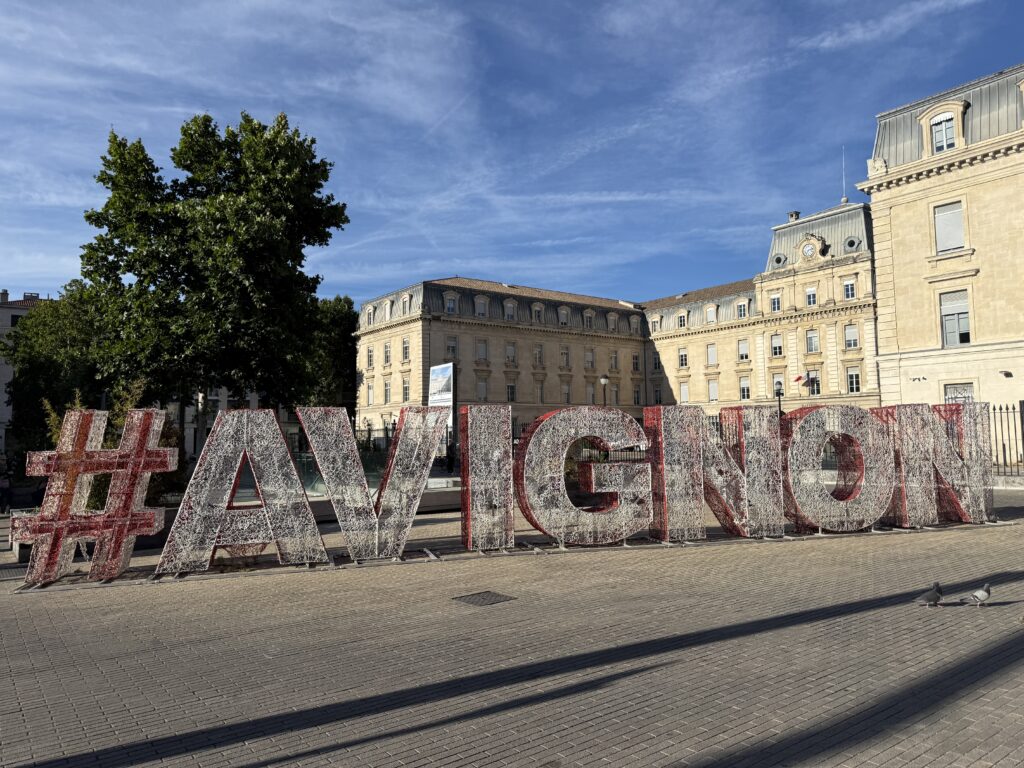
On my first night in town, I wandered the streets. The architecture here was different than Carcassonne, because the buildings were grander and made mainly of blocks of yellow stone. It reminded me of Paris and a bit like the federal buildings in Washington DC. I enjoyed wandering through the wider but not too wide streets and watched the sun turn the buildings gold in contrast to the bright blue sky.
The Pope’s Palace
The next morning was a big day—I toured the Pope’s Palace. For a little context, around 1100 AD, political tensions were a-brewing in Rome and so the Pope wanted a new home base. Avignon was a nice candidate because it is central, on a major river (Rhone), and has a nice hill to be able to look for coming threats. They built the palace and cathedral on top of a rocky hill so it towers above the rest of the city.
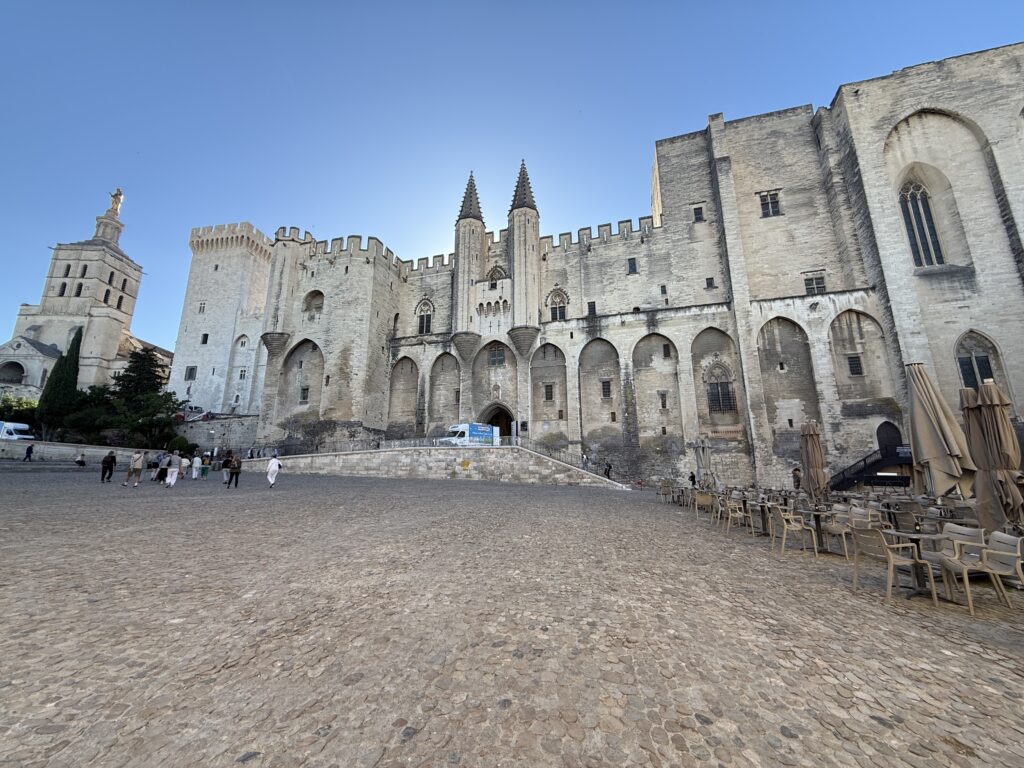
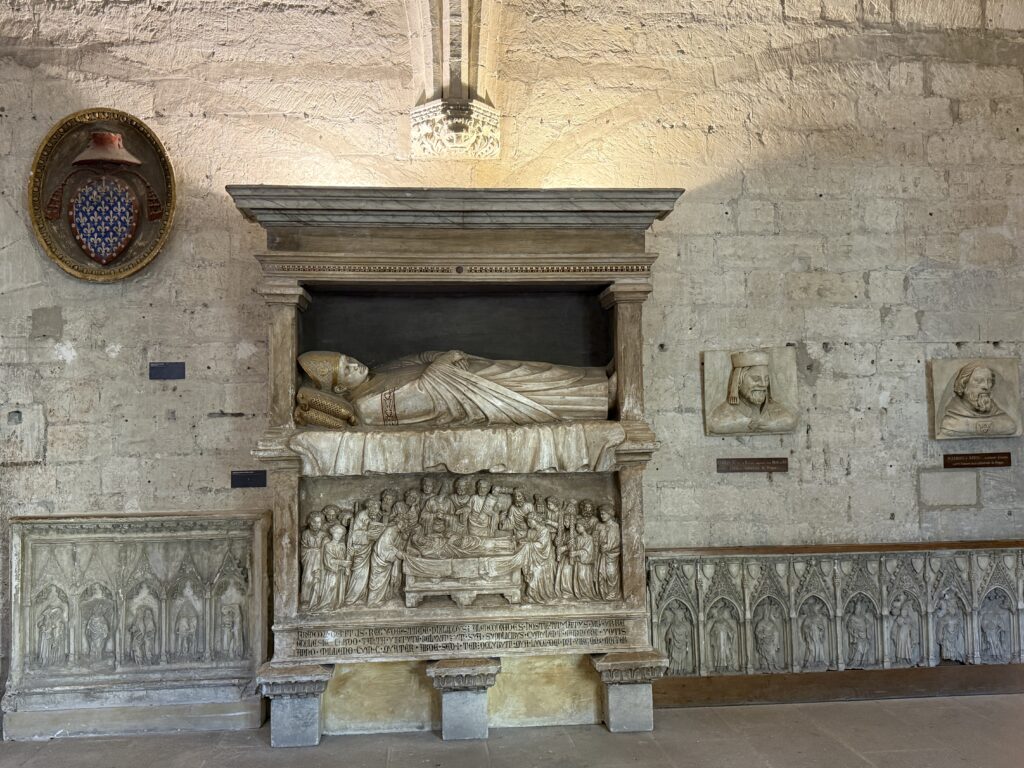
My tour was cool; they created a walking guide for your phone to explain the different rooms. This ‘palace’ is no longer furnished because it lived many lives after the papacy went back to Rome. However, several parts of the original still remain and they know the purpose that each room had while the popes were around. Up at the top of one of the buildings, we could go outside and get a pretty killer view of the surrounding area. In one of the main courtyards, workers were setting up a stage and stadium seats. Each July, Avignon has an arts festival that tons of people come to. I am glad I was not around for that! There were still plenty of tourists for my taste.
Pont du Avignon
After the tour of the palace I swung into the Dom, a smallish cathedral next door, and the lovely gardens at the top of the rocky outcrop. They had a bathroom up here, but it was a weird one. Weird to me, but I have since experienced these a couple more times. You go into the personal bathroom and everything is wet. There isn’t a flush button, and you have to push a button to lock and unlock the door. Once you leave, the toilet flushes and water (Disinfectant? Hopefully, but who knows) is then sprayed over the whole room.
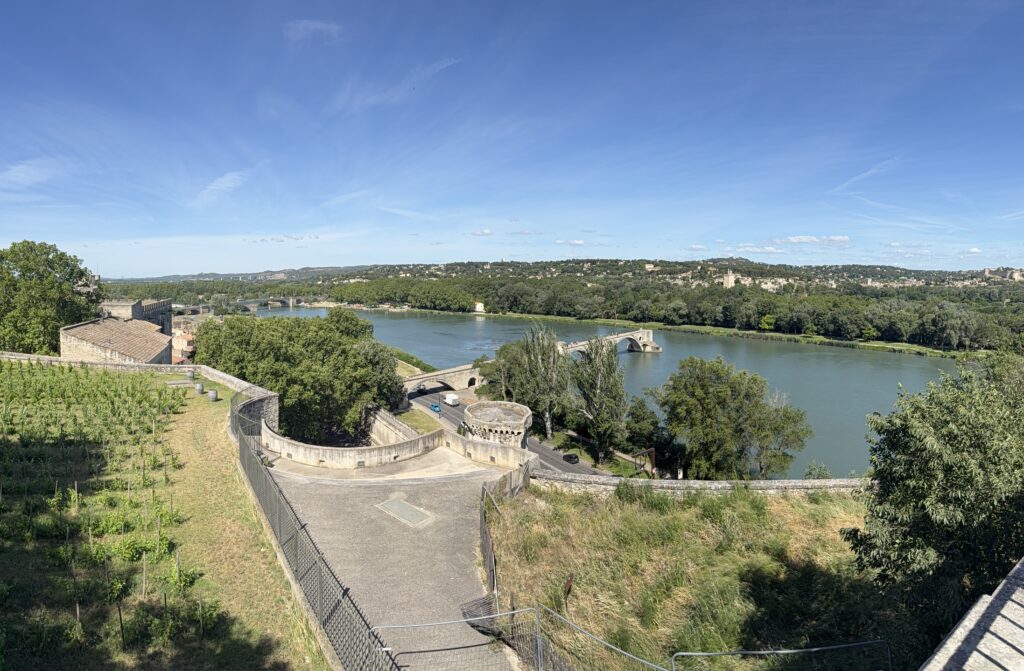
Anyway, back to the bridge (pont). This bridge is famous because it is only half a bridge. It was built in the Middle Ages, but due to changing climate and the challenges of a large river that floods a lot, it kept washing away. They stopped fixing it after a while and so now it stops halfway through the Rhone.
Tour of Provence
The next day I went on a full day, small group tour of Provence with an effervescent tour guide, Emilie. We hit several stops and villages along the way and I learned a ton about the area. Here are some fun facts:
- Provence is the bread basket of France. They grow a ton of produce down here. What’s fascinating is that the area only gets rain around 20 days of the year. Due to a high water table and some irrigation canals put in a couple hundred years ago, the area is extremely green.
- The wind is so strong here it gets a name: the Mistral. I experienced around 20 mph, but it frequently is more intense. This means a couple things, but for the crops it means they don’t have to use pesticides because the winds blow to kingdom come any bugs that try to land on a leaf.
- The apple trees looked weird to me because they prune them to be tall and skinny instead of bushy like our apple trees. This means less fruit, but the fruit is of a higher quality. If I think about this enough, I’m sure there is a metaphor here…
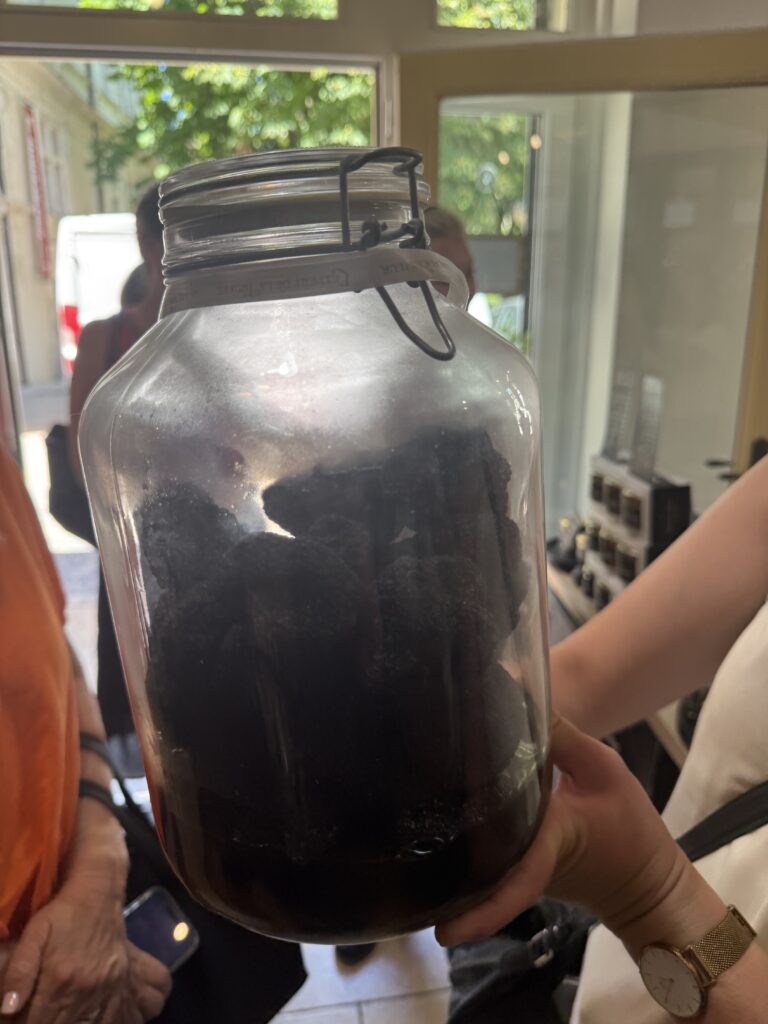
- I don’t like truffles. They farm them here, which means planting oak trees so the truffle can grow near the trunks. Then they have trained dogs come and sniff them out; the dogs replaced the pigs who used to do the job because the dogs don’t try to eat the truffle as much. Truffles are big business here; in a truffle shop we saw a flour sized jar with some that cost several thousand dollars. I learned I don’t like truffles at this shop; we sampled a bunch of different types of truffle product and the only one I liked was a blend of truffle powder and herbs de Provence that tasted like the herbs and not truffles.
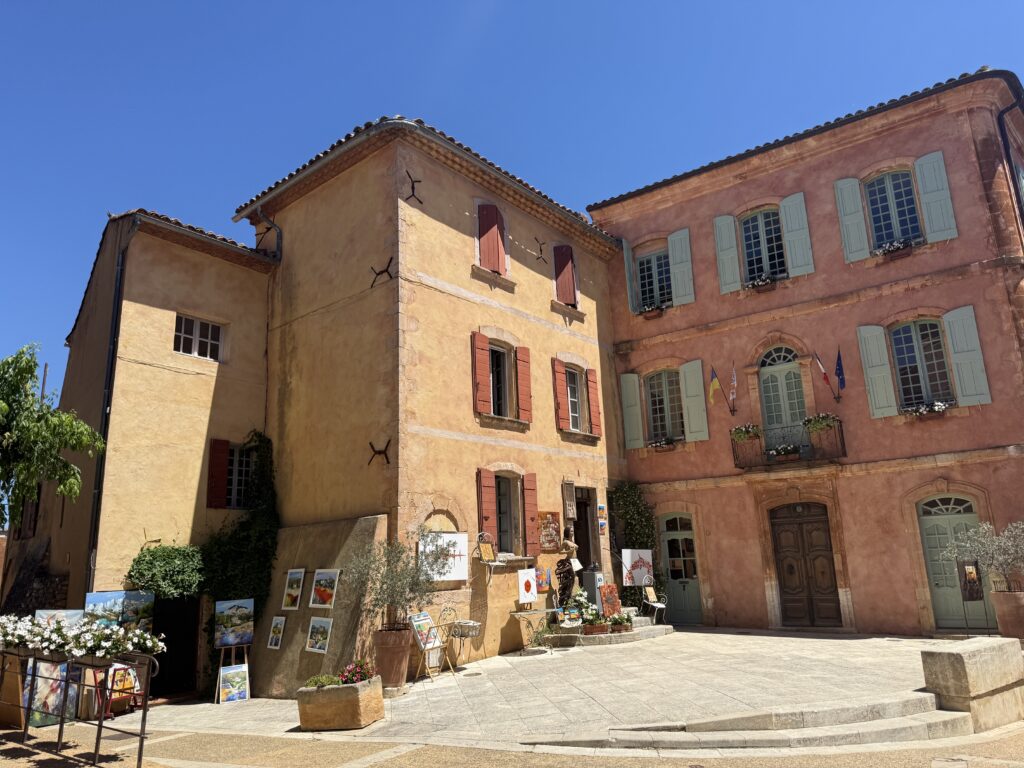
- We stopped in several different villages: all cute and very French. I enjoyed getting a fresh peach from one village market and also seeing the church that Vincent Van Gogh painted in Starry Night. Speaking of VVG, we saw the sanatorium where he lived for a year before the end. That was sad.
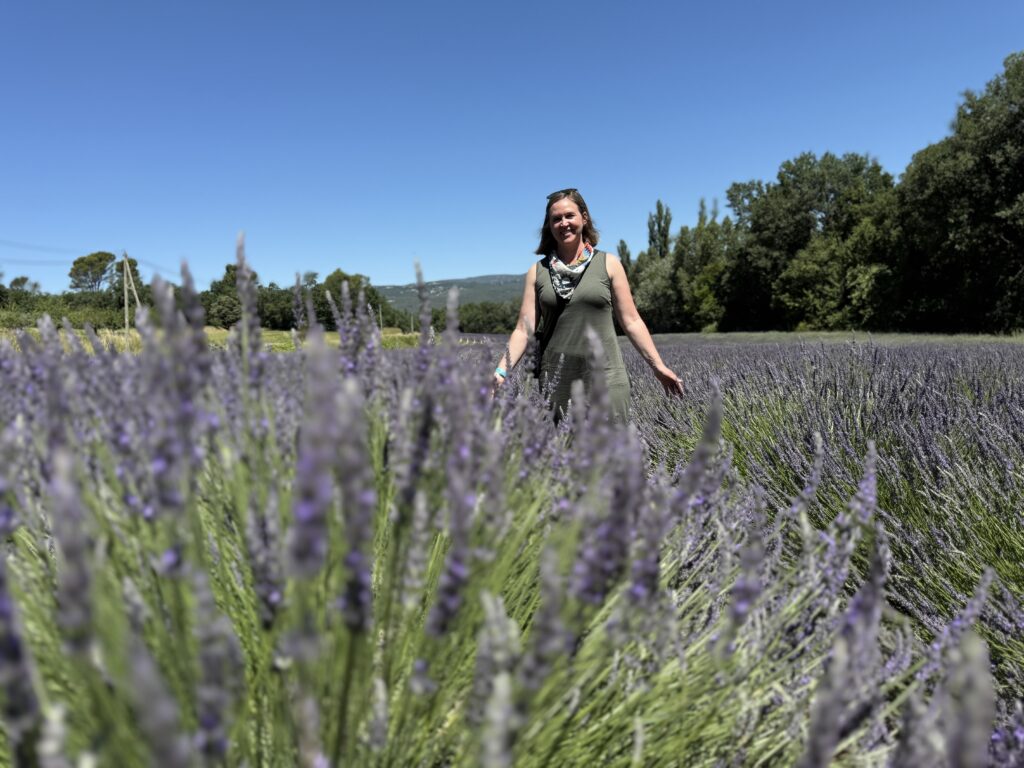
- Did you know lavender has a natural hybrid called lavendine? I didn’t either. Lavendine grows at lower elevations and has a more vibrant color and smell. We came upon a lavendine field that fulfilled my dreams of walking through a lavender field in Provence that I didn’t know I had. Unlike B, I really like the smell of lavender.
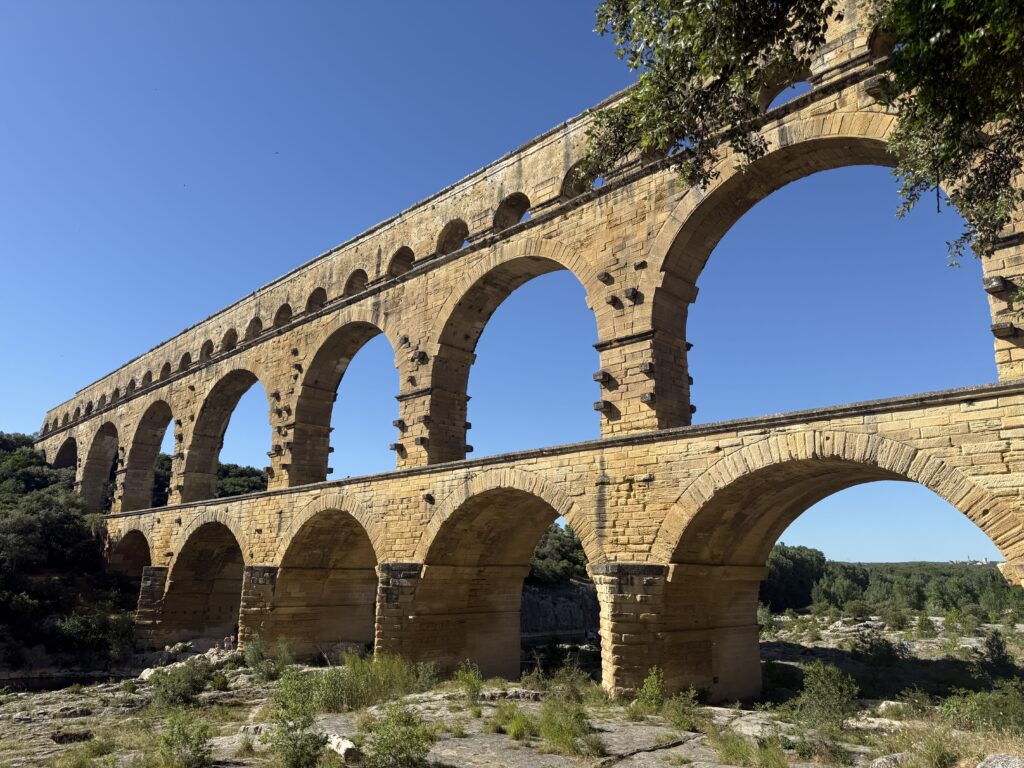
- For the finale of the tour, we visited the Pont du Gard (bridge on the Gard river). The industrious Romans built this triple decker bridge in the 1st century. It miraculously took them only seven years. They built it because they needed more water in one of their cities and so the top layer of the bridge is an aqueduct (canal) that took water from another area to their town. The bridge is as tall as the Statue of Liberty and is regarded as the best example of a Roman aqueduct bridge that remains. It was awesome to see in person. I felt very small next to it and just can’t fathom chiseling out one block of rock, much less all of the rocks in all of the angles that are needed to create something like that.
Au revoir, Avignon
I wrapped up the long day by swinging into a pharmacy to buy some lavender essential oil. Emelie told us that the oil sold in pharmacies has to be a high quality because people use it for medicinal purposes. Since I am limited on space, this is a great little souvenir from my time in Provence.
Leave a Reply