
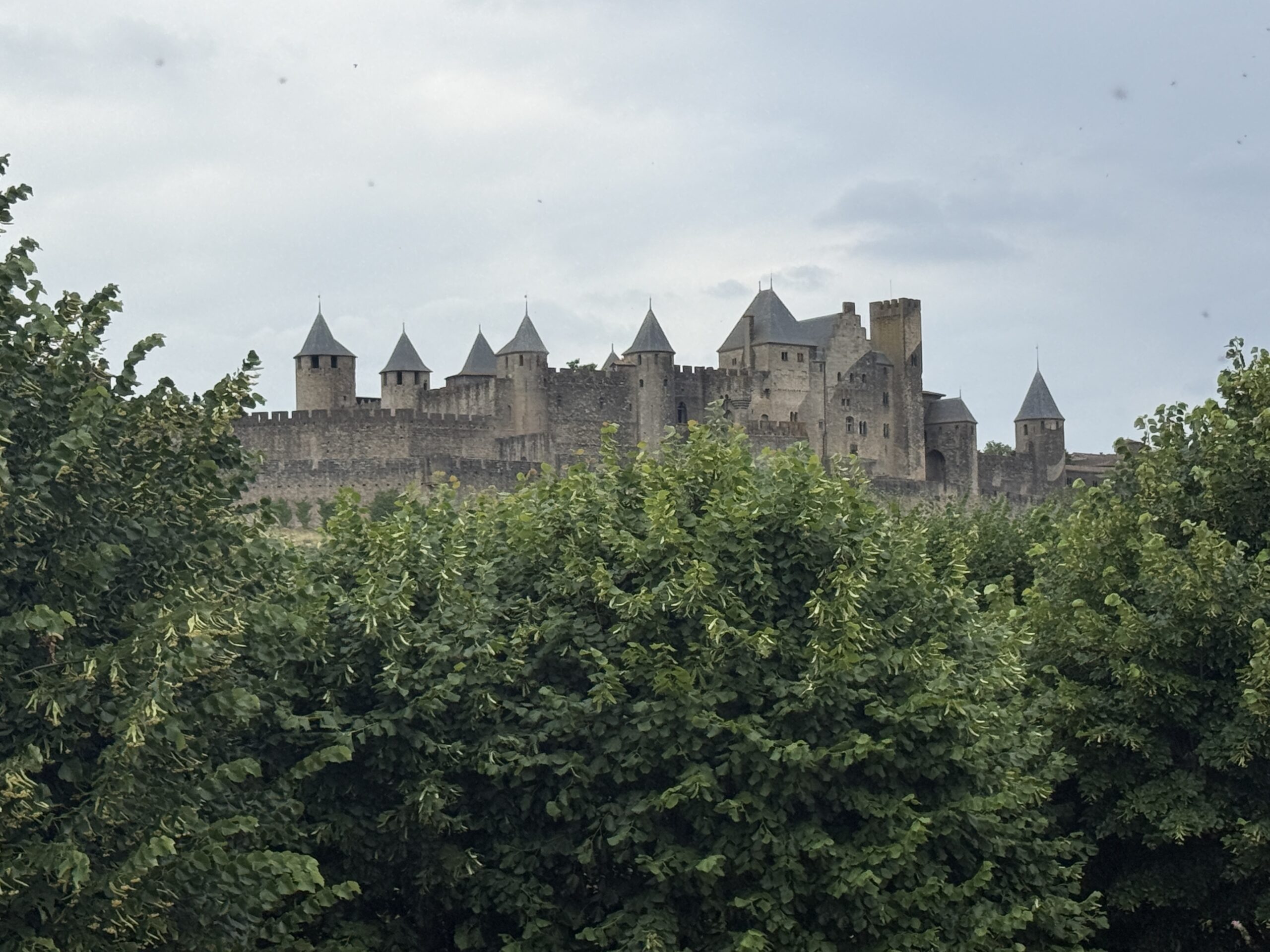
I arrived to Carcassone after taking a stunning bus ride through the Pyrenees. The blue sky complemented the green mountainsides. There was still snow on some of the rocky mountain (lower R and M) tops. After hopping on a train in Toulouse I arrived to Carcassonne, a small town in southeastern France. I came here because Carcassonne has an intact walled town.
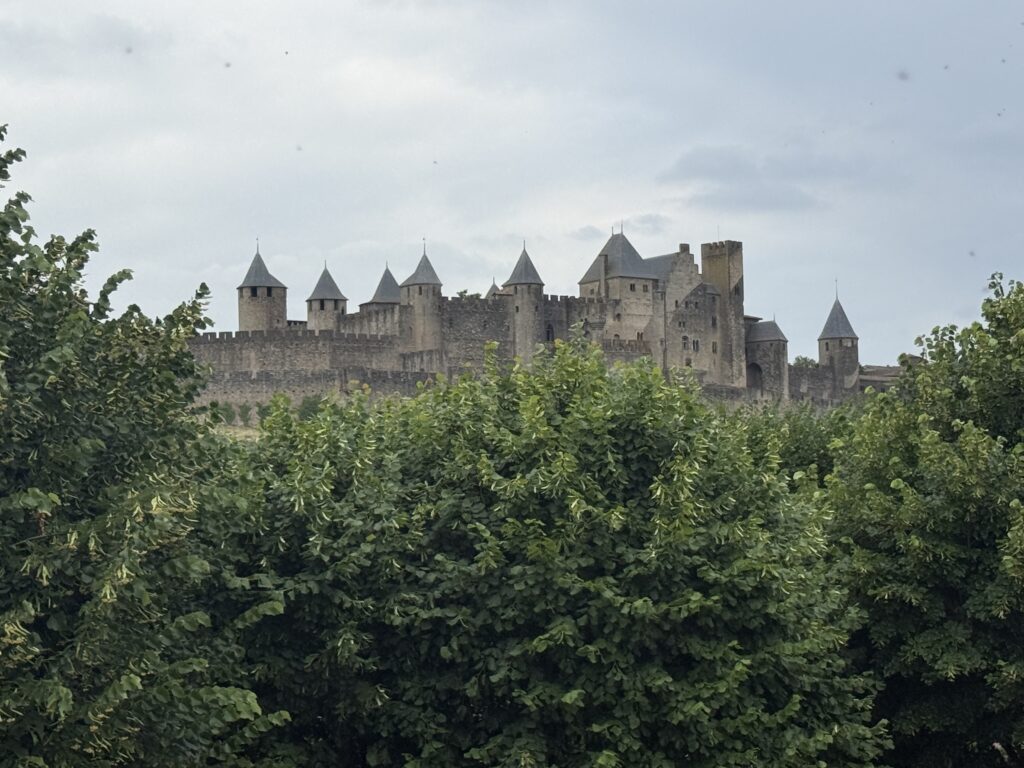
A little history
The Gaulic Romans started the wall back in the 5th century, but in the 1200s the ruling family decided to beef it up a bit. This was a good decision because the pope launched a crusade against this town because this area of France and an area in Northern Italy had a significant population of Cathars. The Cathars were Christians, but not in the way the pope liked, so he called them heretics and sicced crusaders on them. The people holed up in the town for a siege, but eventually came out. Most were killed in an inquisition. After this, the king of France decided to scoop up the town and extended the walls further. However, after a couple hundred years, everyone moved out and the city fell into disrepair until a major restoration effort in the 1800s.
The Bastide
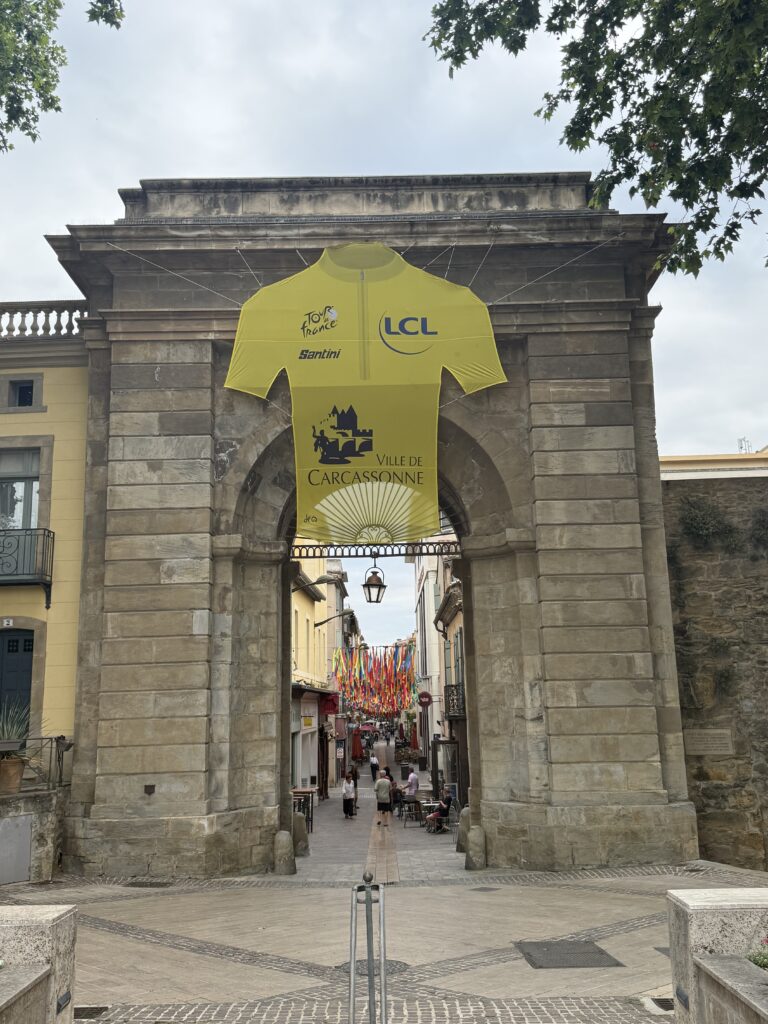
What’s funny to me is that I knew I was coming here for the walled city, but what I didn’t know is that just across the river there is another perfectly good medieval city. This area is called the Bastide and the walled city is called the City (el Cite). On my first day here I wandered through the Bastide. I hit up an art museum that locals amassed over the years and wandered through the cute cobbled streets. I visited St. Vincent, a church that has a bell tower with 250 stairs, which of course I had to climb. The view of The City from the top with the Pyrenees in the background was pretty awesome.
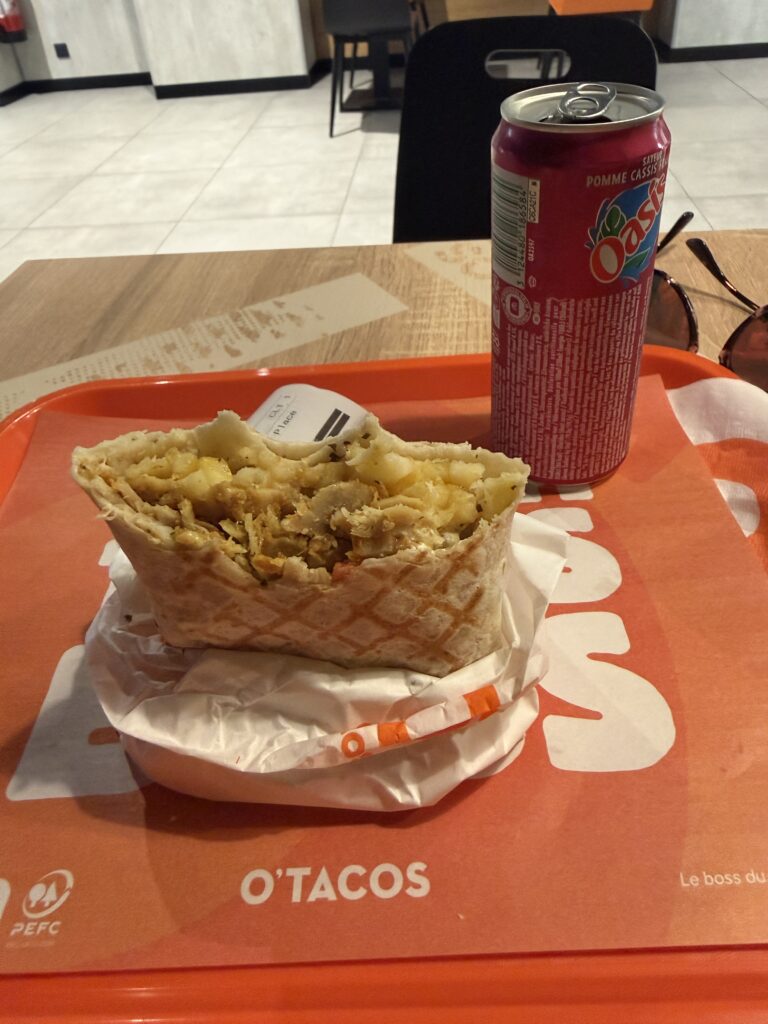
I needed to recover after the climb so I picked up some lunch at O’Tacos. A couple years before B and I visited Paris and stumbled upon a French taco place. These tacos are very confusing, and not at all like tacos from Mexico. Think instead of a tortilla folded up and cooked like a panini with random stuff inside. My version at O’Tacos was full of chicken, French fries, feta cheese and I think some sort of vegetable. They are bonkers but filling.
The City
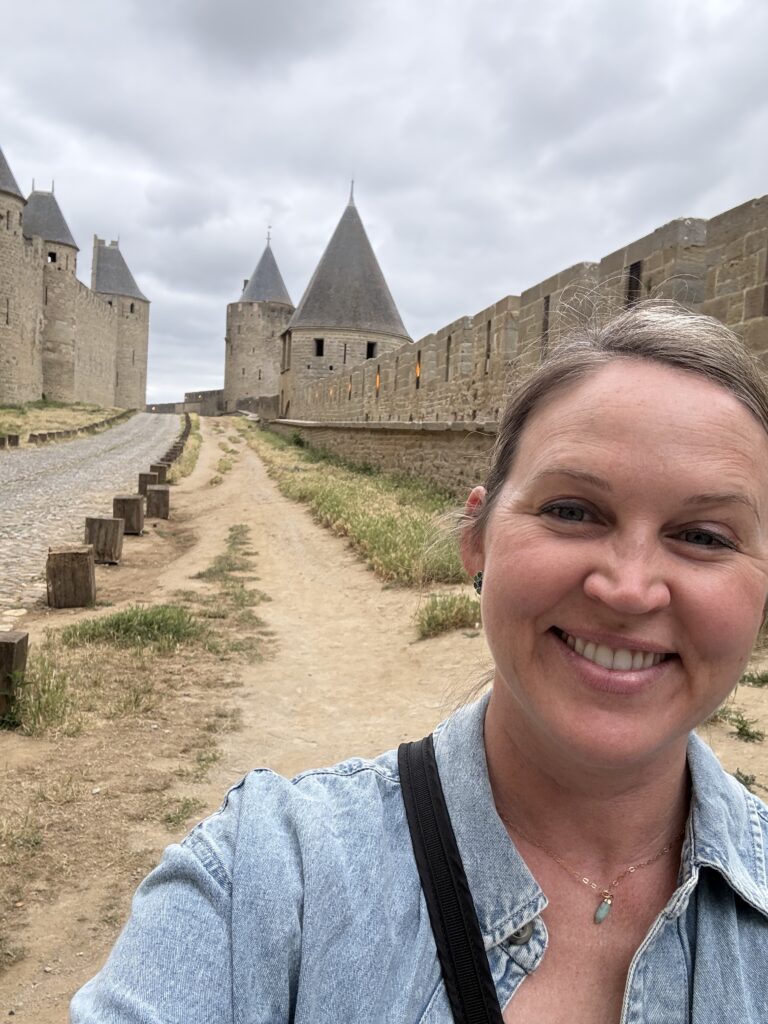
The next day I did what I came here to do: explored The City. After walking over a small bridge, you make it into the first of the walls. In between the first wall and the second wall is a wide, grassy area that you can walk on. I looped The City, which took around 30 minutes, stopping for pictures.
The inside of The City has streets going every which way and lots of restaurants and shops. I opted to take a tour and learned so much about the history of this area and the way the place was built. It was fascinating. Here are some tidbits I picked up:
- You can tell the difference between the older Roman wall and the medieval one because the Roman wall used stones that were rounded and the medieval ones were cut into rectangles.
- The medieval folks would put up wooden structures called hoardings that attached to the top of the walls. This provided a place for the defenders to run around, shoot their crossbows, and drop stones on the people below. (Our guide said they didn’t actually pour boiling oil or boiling water on the wannabe invaders because oil was expensive and water was precious. Stones were plentiful.) At the end of the fighting season, they removed the hoardings and put them in a safe place for the next year.
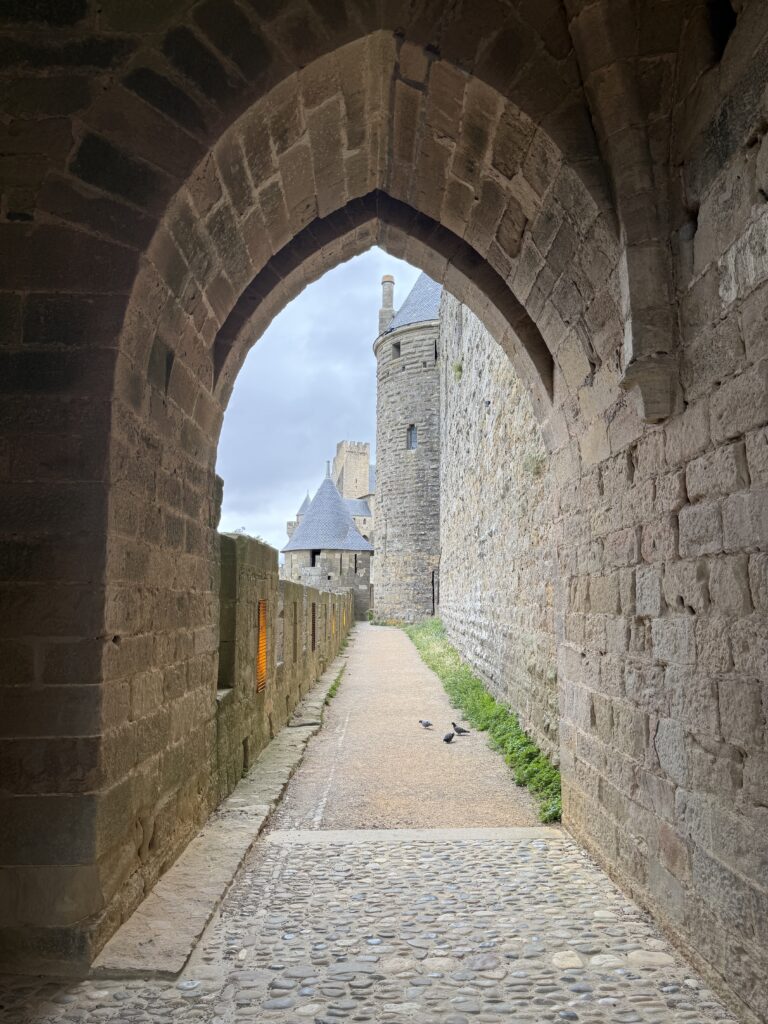
- The gates had perpendicular turns in them so even if the battering ram made it through the first door, there was no way it could be used on the second door because of the angle. #Math
The Castle
After the tour, I visited the castle. This castle was more the remnants of a castle than a real castle. Think more outline than finished product with tapestries and four postered beds. It was very cool, though, and quite well done. My favorite fact was that the castle walls weren’t built to protect against invaders. Nope, they were built to protect against the locals who might get mad when they had to pay taxes. Ha!
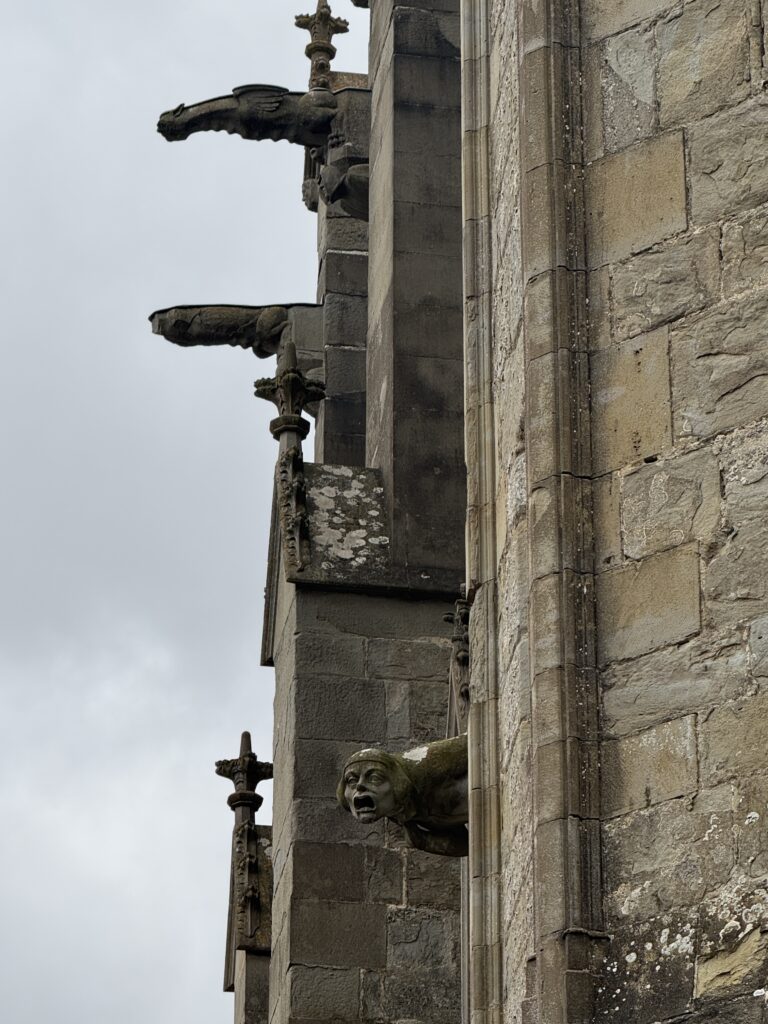
My last mission for the day was to walk the ramparts of the second wall. This took around an hour because you had to go up and down the steep steps when you made it to each tower (of which there were a LOT). It was really cool and I took more pictures of castles and country side than I know what to do with.
Carcassone was incredible. I had some transportation challenges to get here and get away, but I’m really glad I opted to visit.
Leave a Reply