
I joined up with some family members for my visit to Athens. This was my first time to Greece and I was excited to see the origins of so much of western civilization. I spent several days in Athens, then took a ferry to the Cyclades Islands, visiting Mykonos, Delos, and Naxos.
Athens
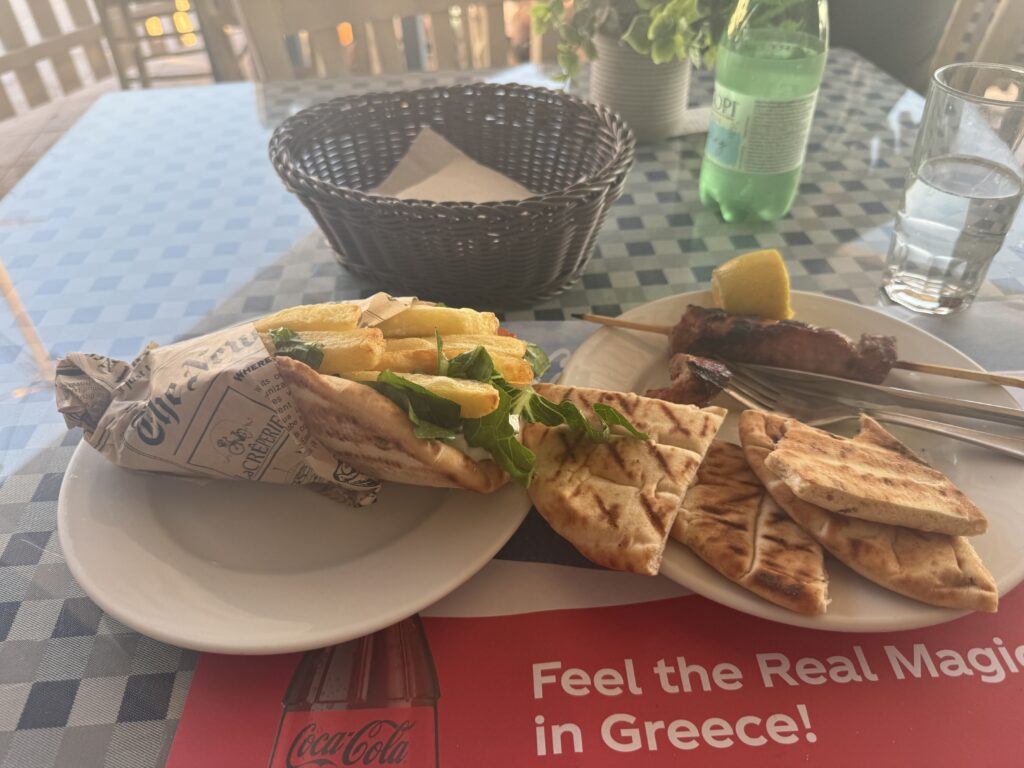
I still get confused with Roman names vs. Greek names of the Goddesses and Gods, but Athens is for sure Athena’s town. It currently holds about five million inhabitants and getting anywhere takes a really long time. There are apotekas (pharmacies), mini markets, and cafes on every corner. Most importantly, the food is amazing! Here are some of my takeaways and things I learned.
- ‘Acropolis’ and ‘agora’ aren’t specific to Athens. Acropolis means the highest place and agora means central public space. In Athens, the acropolis is on a big ol’ hill right in the middle of town. The Parthenon is up there. Athens Agora is near the Acropolis and now contains a bunch of ruins and green space.
- The smirk on statutes helps archeologists date when they were created. If there is a really good smirk, it is probably from around the 6th century BCE.
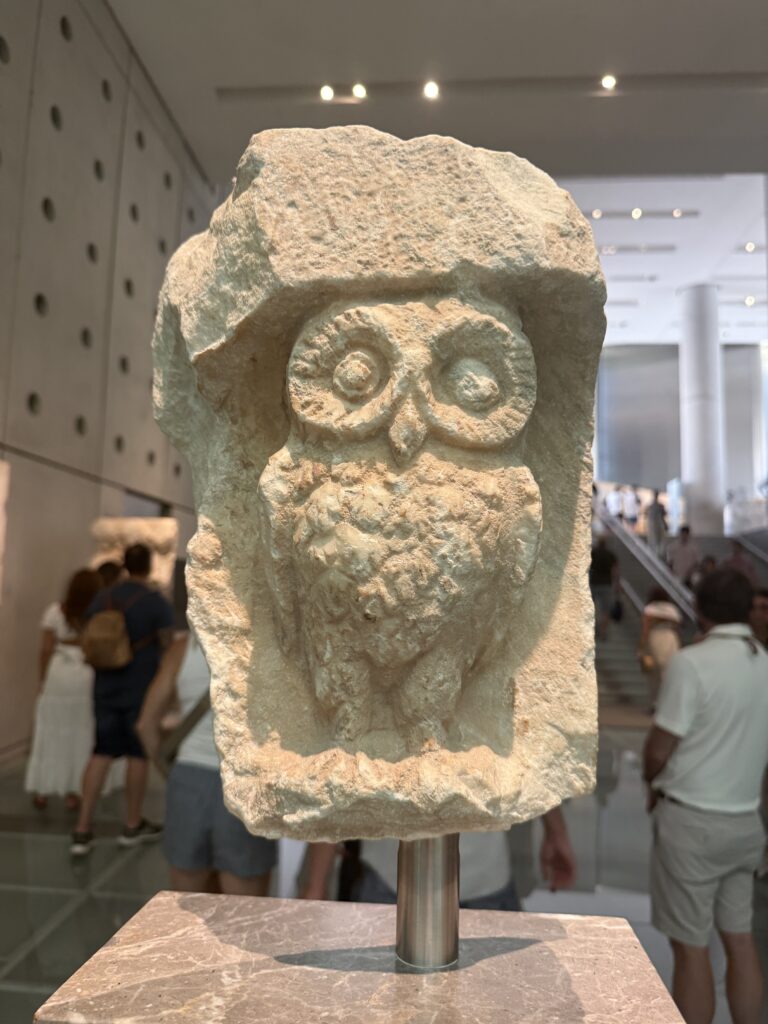
- Athens could have been called ‘Poseidonas’ or something like that. The story goes that Athena (Goddess of Wisdom) and Poseidon (God of the Sea) both wanted the city. They each gave the people a gift and whichever one was better, that God got the city. Athena gave them an olive tree, which provides food, oil, etc. and Poseidon gave the people sea water, which provides…undrinkable water. Athena got the W.
- The National Gardens is a great park right next to the main sites of Athens. You can go here for some shade and enjoy seeing cute turtles. We overheard a confused tourist ask, ‘Caesar was here? I thought he was from Spain.’ Ha!
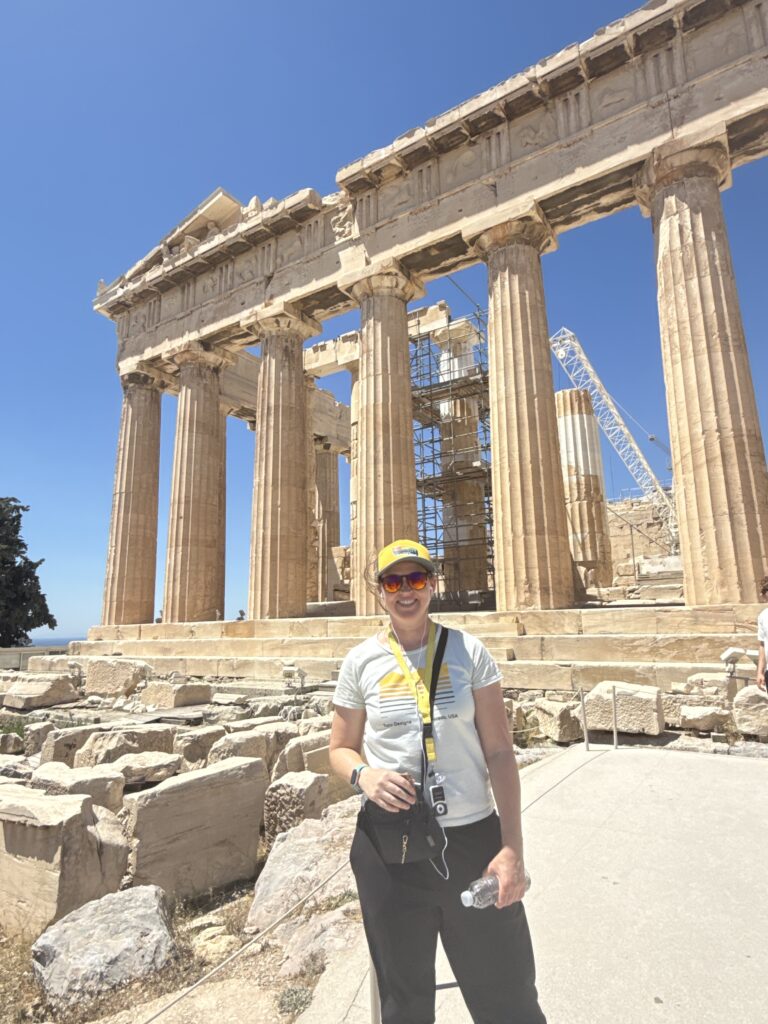
- The Parthenon was Athena’s temple, then a Greek Orthodox Church, then a Christian church after the crusades, then a mosque once the Ottomans took over, then was partially blown up accidentally when the Italians were in charge, then became what it is now after the Greek revolutionaries said enough is enough!
- During the Ottoman rule of Athens, British Lord Elgin negotiated with the Ottomans to pry off some of the marble statutes on the Parthenon and take them to London for ‘safe keeping.’ Being as Athens has now built a state of the art museum right next to the Parthenon and London won’t give them back, it makes England look real shady. This is pretty much the same story as the brand new Egyptian museum in Cairo, so I’m curious how many countries are gonna keep ‘protecting’ things they have collected. In Athens they call these statues the Parthenon Marbles instead of the Elgin Marbles, which is a pretty sick burn. (If my dad is reading this, he’s for sure rolling his eyes and thinking about how ‘woke’ his daughter is 😂.)
- The stadium from the first modern day Olympics is really pretty. This is the place that the guy ran to from the battlefield of Marathon to let everyone know the Greeks had beat the Persians. The poor guy died from his efforts. Not many remember his name (Pheidippides) but people do remember the distance he ran.
Corinth
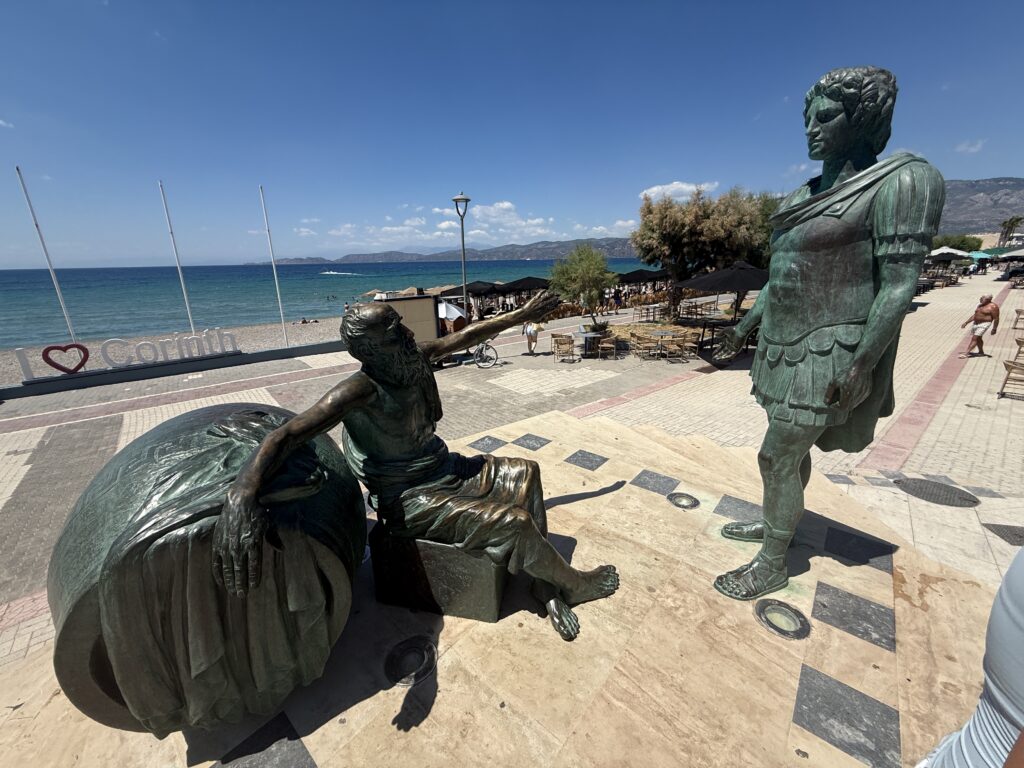
Corinth was an hour train ride from Athens. It is on the Ionian Sea instead of the Aegean. To get there you cross over the Corinthian canal, the Erie Canal of Greece, which connects the two seas. Someday I’d like to take a boat through it, but for now I’ll be satisfied seeing it as a blip as our train sped through. My favorite thing about Corinth (besides the ice cream I ate) was a statue of a homeless guy sitting on the ground next to a fancy looking general. This is the philosopher Diogenes and Alexander the Great. The story goes that Alexander came to town and asked if he could give Diogenes anything. The philosopher was not a materialistic guy and replied, ‘you can slide over a bit, you are blocking my sun.’ Ha!
Mykonos
While staying on Naxos, I took a day trip to Mykonos and Delos. Mykonos is very famous and was very crowded with tourists and shops. I didn’t love it. While I can appreciate that the white buildings contrast strikingly with the blue sea, it felt extremely commercial and inauthentic to me. I feel bad for the people who live there and hope they get to enjoy their beautiful island other parts of the year when tourists aren’t choking the walkways.
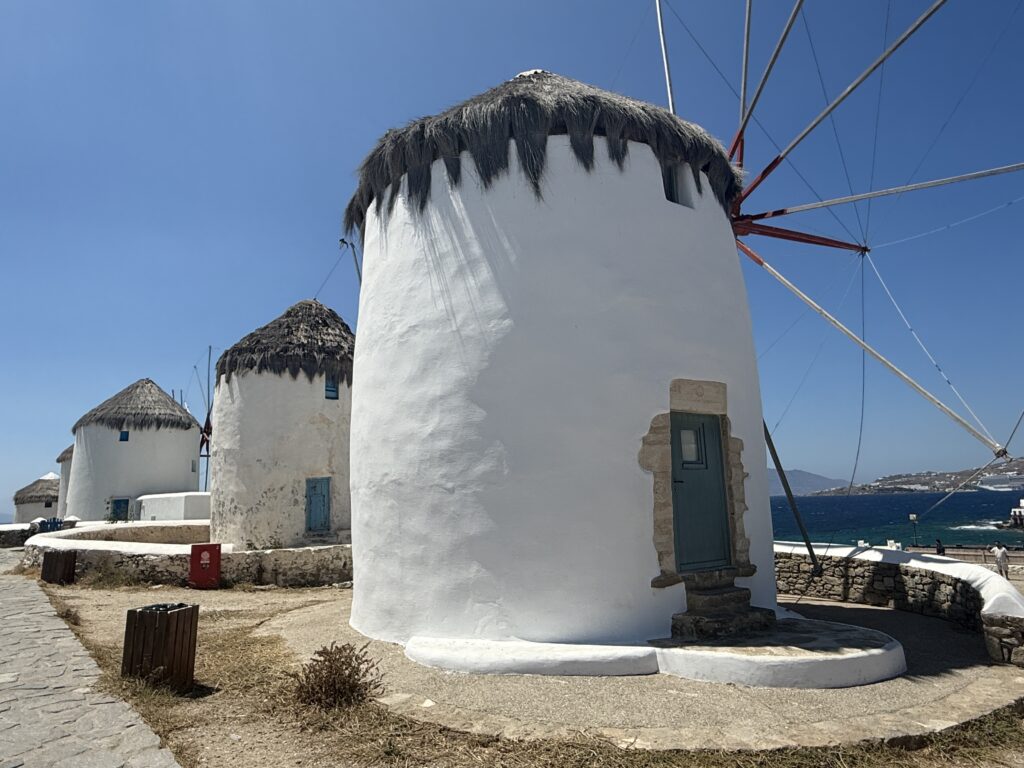
Delos
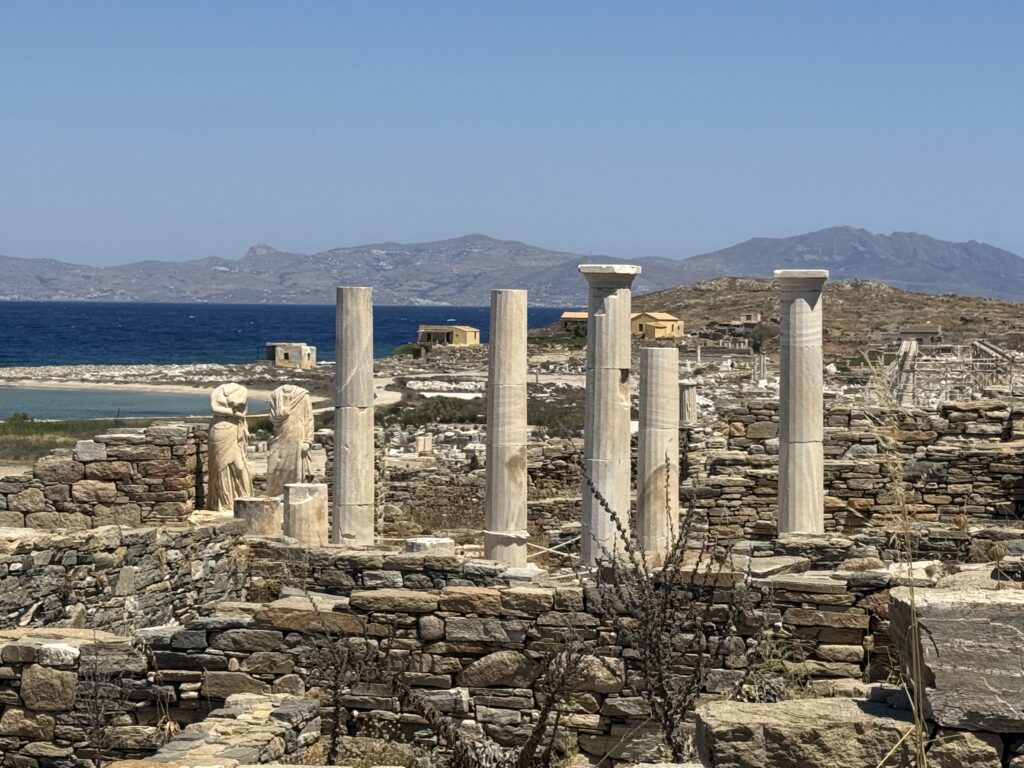
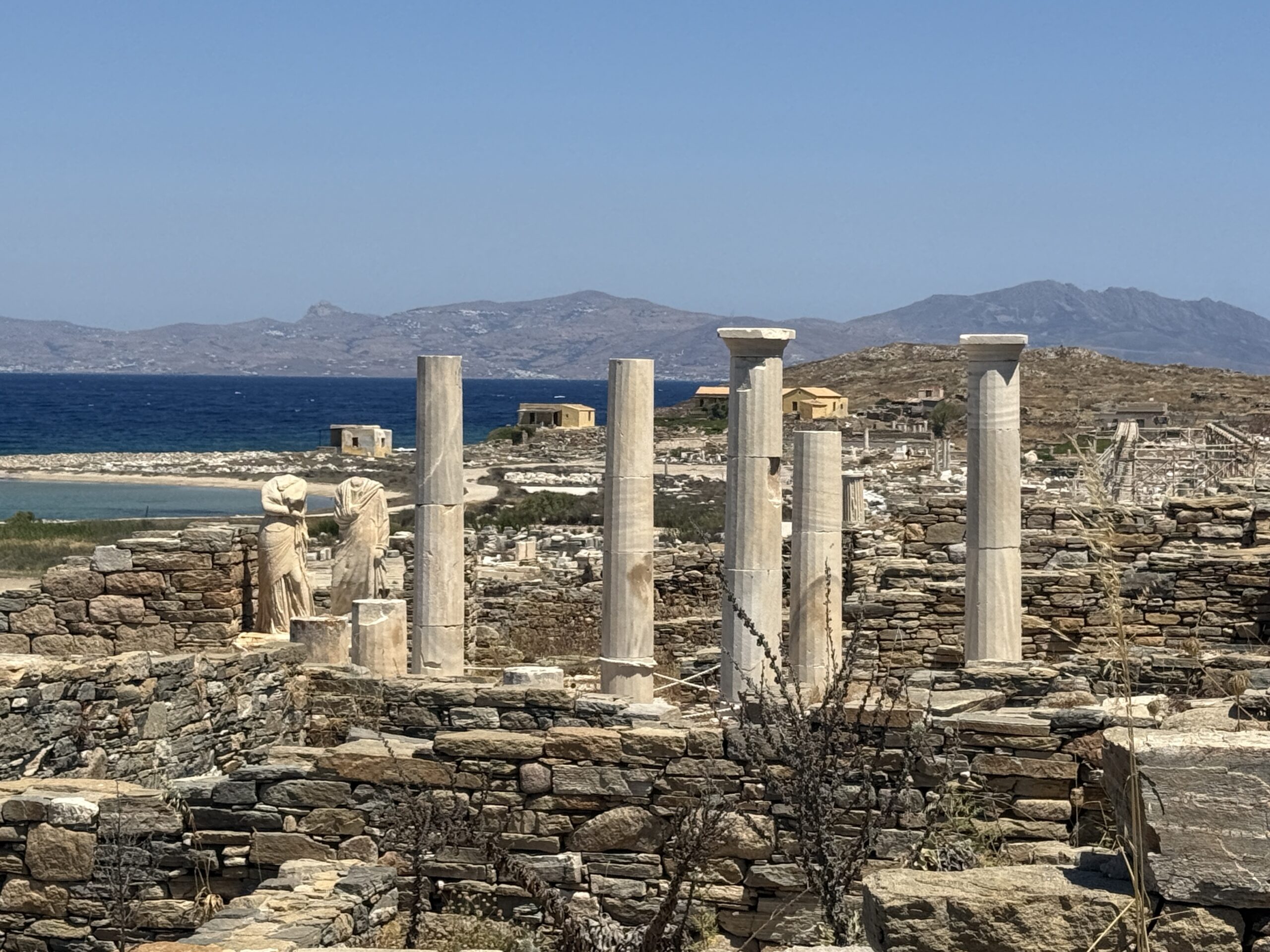
Delos was quite the opposite of Mykonos, mainly because it is an island full of ruins and no people. Literally…people aren’t allowed to stay there overnight, be born or die there (weird flex, right?), or swim in the ocean. I loved it. I arrived from the ferry and hiked up to the highest hill for a view of the surrounding islands. Fun fact: cyclades means circle. The islands are roughly in a circle centered around Delos. I spent the next couple of hours wandering through the excavated ruins. They have a museum where they’ve put the most important statues, like the group of lions that look a bit more like cheetahs to me.
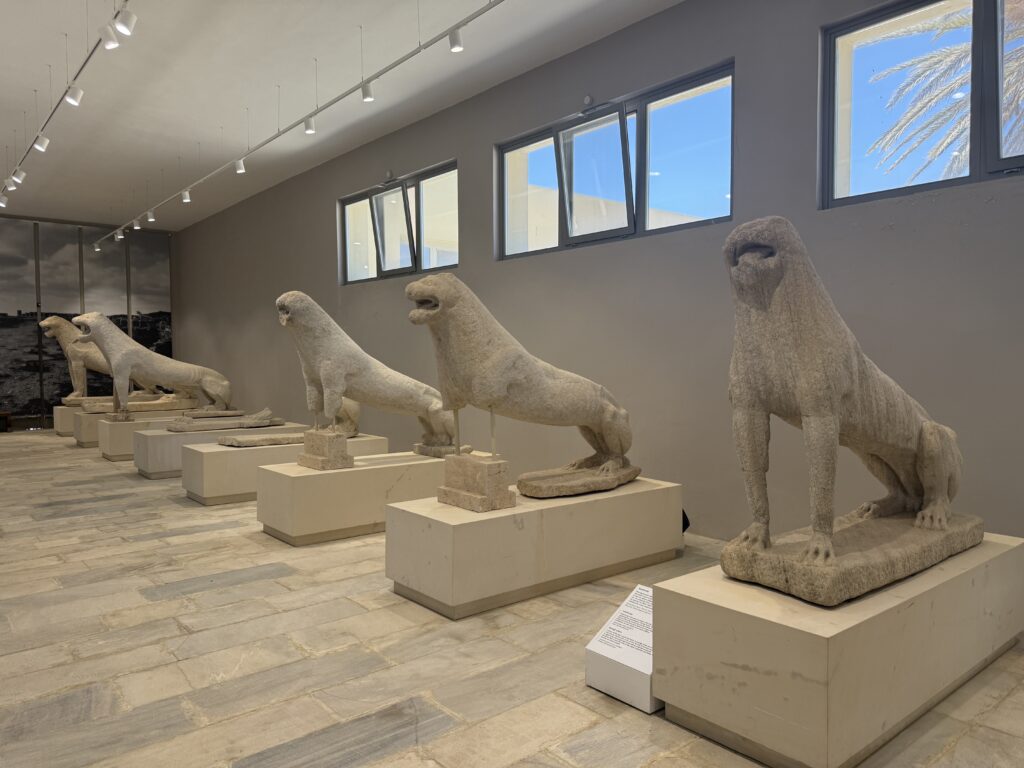
I thought this was funny: you can take pictures of the statutes of people, but you can’t take pictures with yourself or other people with the statues. I don’t know the real reason, but I could see it having something to do with people being inappropriate with the nakedness.
On Delos my natural inclination to be on time was heightened because I definitely did not want the ferry to leave me behind. Fortunately, I did not.
Naxos
Naxos is the biggest of Cyclades but it isn’t as well known as Mykonos or Santorini. I didn’t get to spend a lot of time there, but I felt like it was much more chill. There is a cool ruin of a temple to Apollo that stands proudly by the ferry port. A bus takes you to the different places on the island and my hotel was maybe 50 feet from the sea. I thought it would be poor form to go to the islands without swimming so I took a dip. It felt great because it is stinking hot in Greece in June.
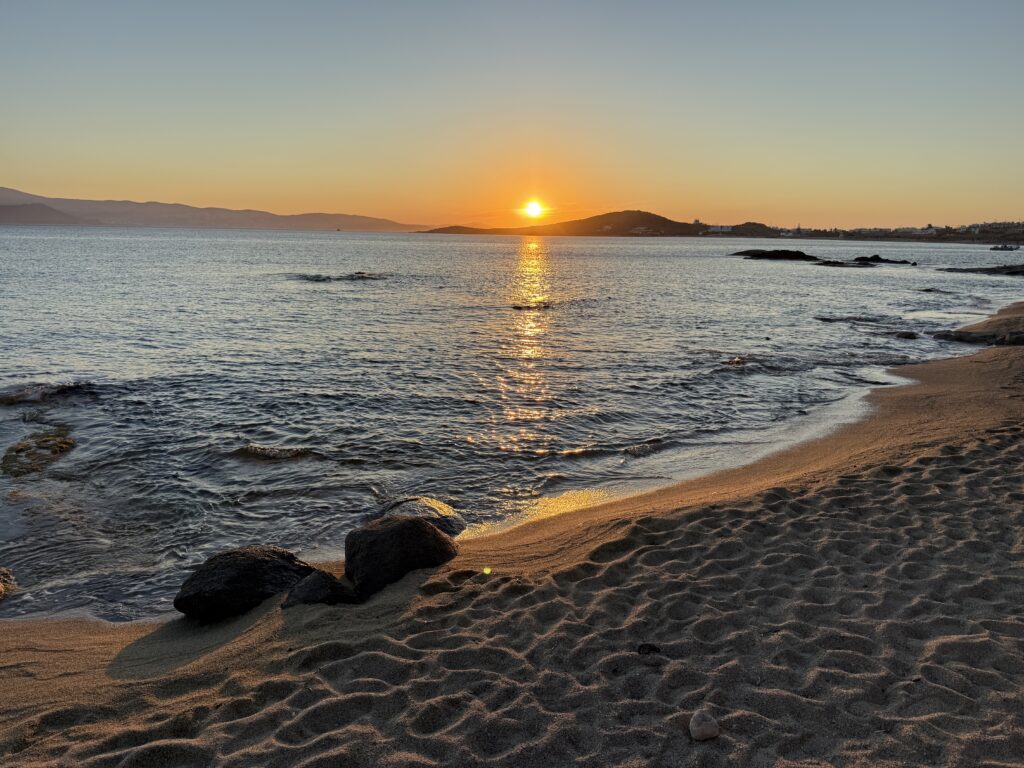
I’m not sure if I have these parts of Greece again in my future, but I definitely want to check out other places. Out of all the countries I’ve been to, I can say Greek food was my favorite.
Leave a Reply