
I ventured out of Santiago again, this time to the north and east regions of Galicia. On this trip I got to see more of the landscape in this region. Everything is green, but in this area I could see more of the farmland. It looked a lot like Scotland, minus the hairy coos.
Beach of the Cathedrals
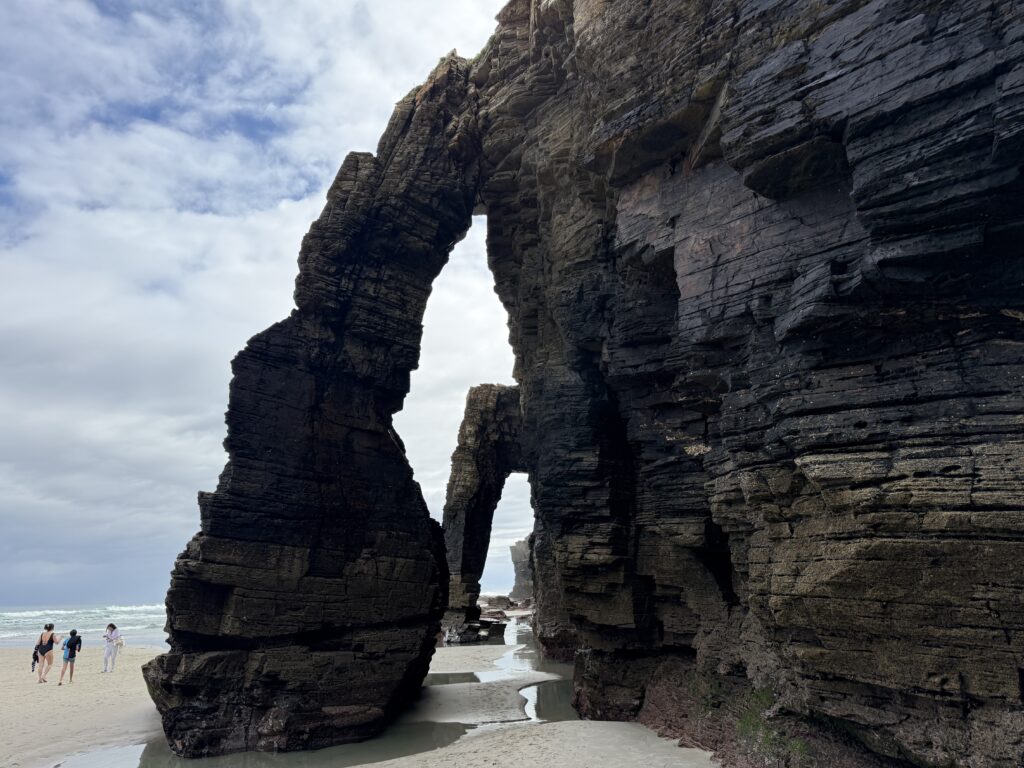
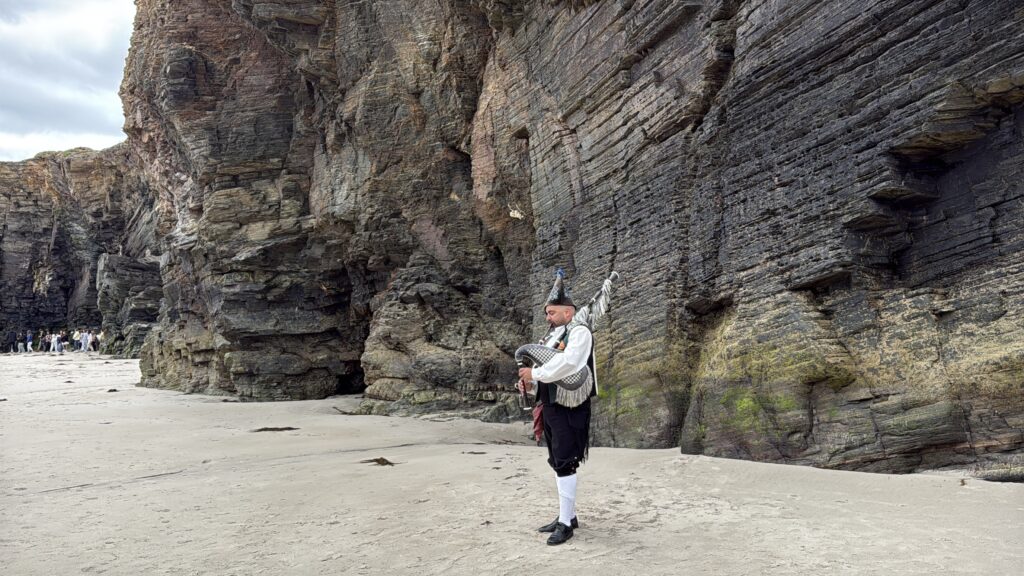
We left Santiago at 8:30 sharp and drove a couple hours north to a national monument, Playa de las Catedrales or Beach of the Cathedrals. This area of coastline is on the flat top of the north of Spain on the Cantabrian Sea. It gets the name cathedrals because of the stone arches that are visible at low tide. The tour timed this right and I got to see the arches and walk on the sandy beach.
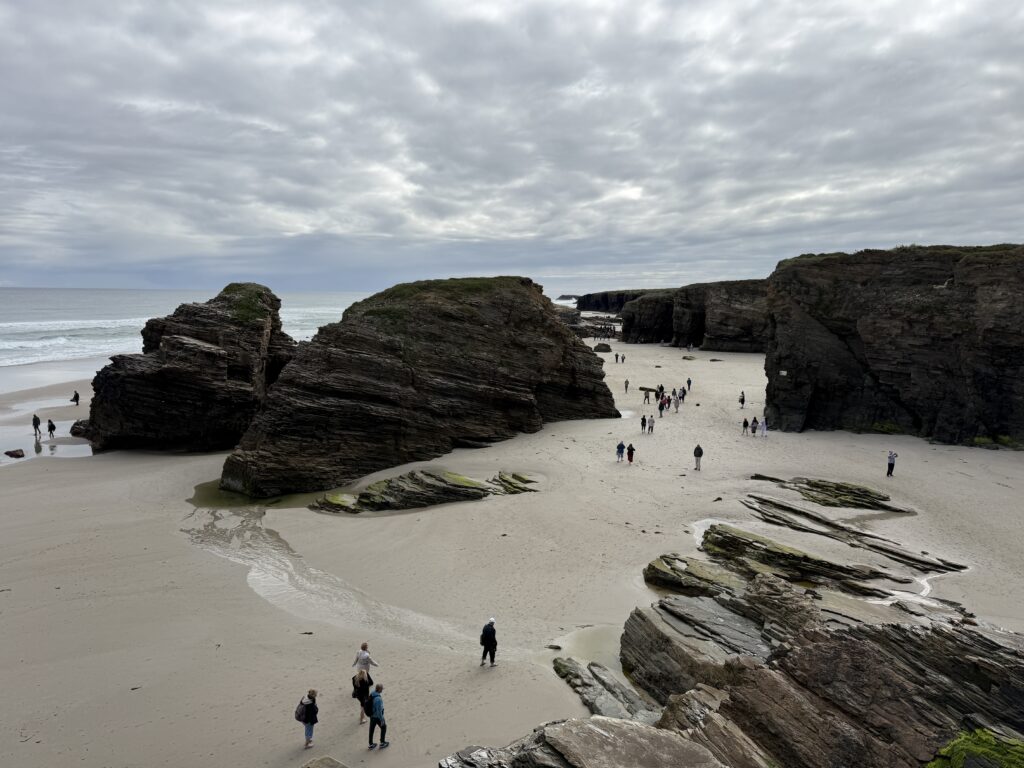
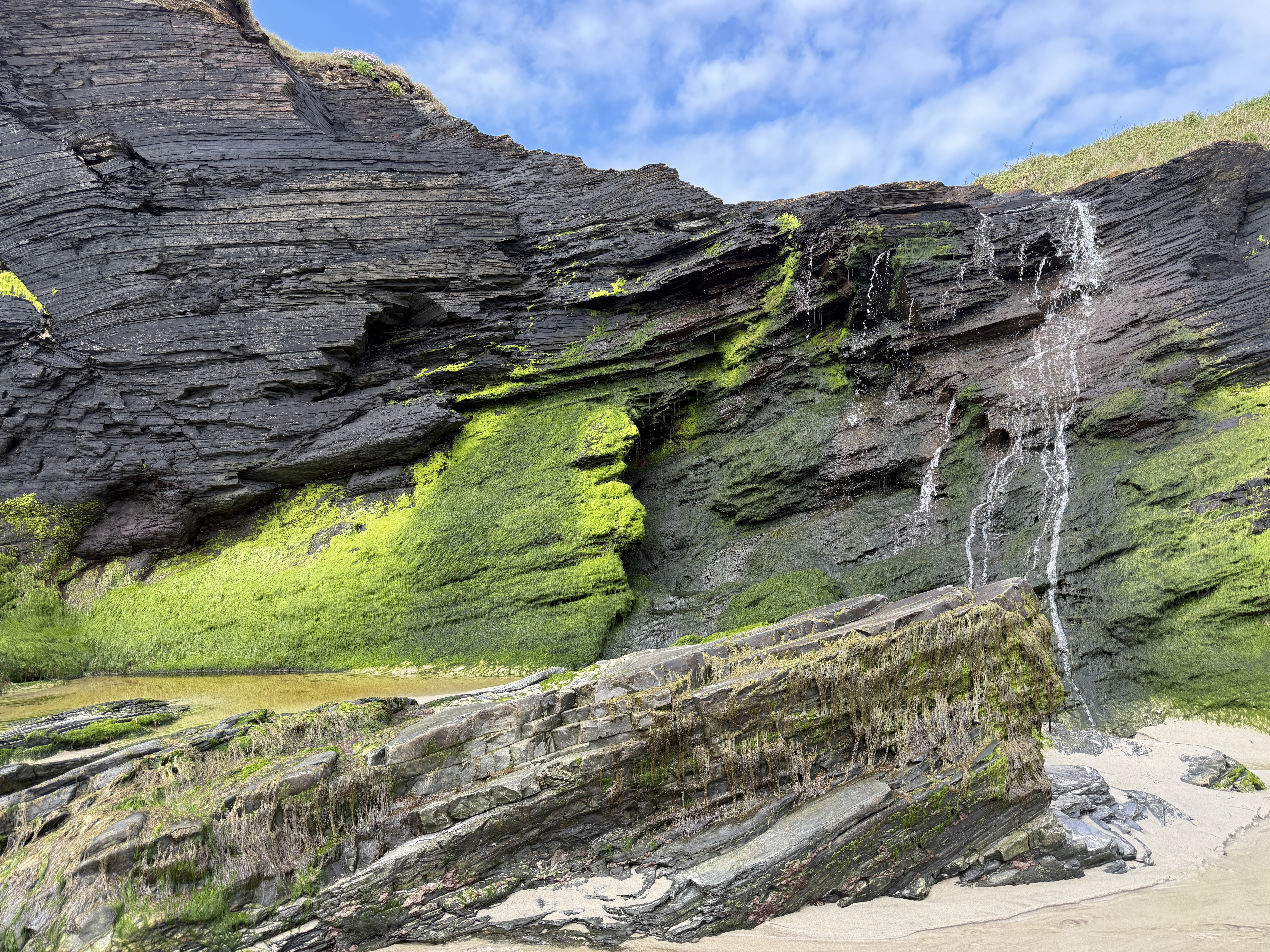
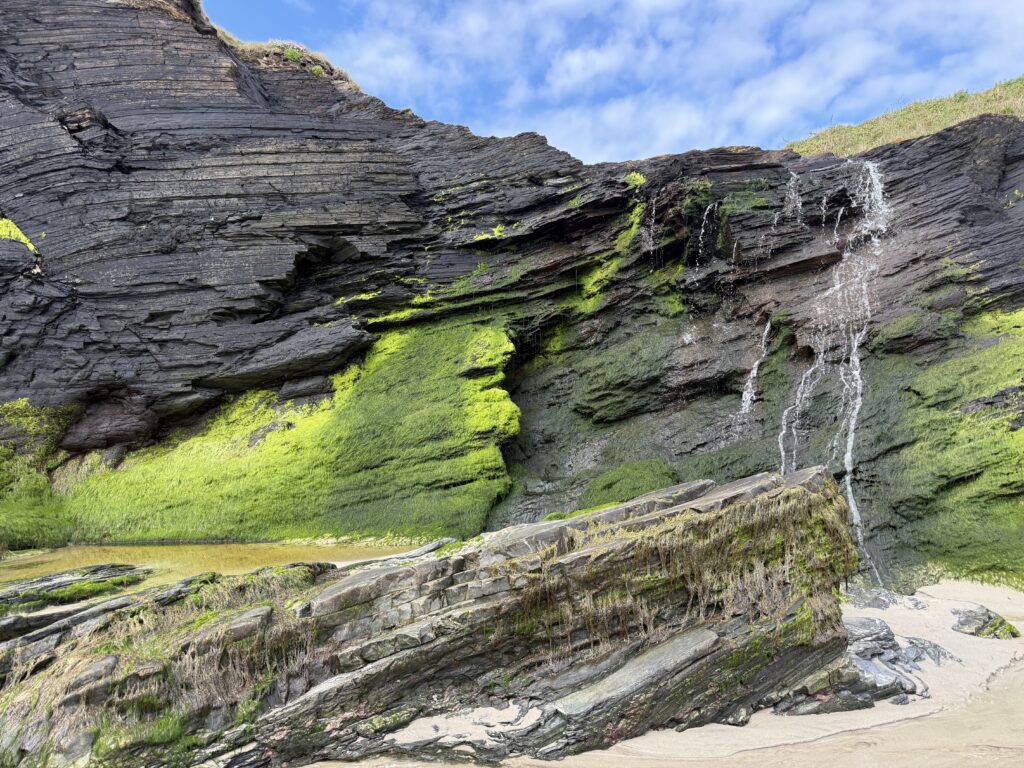
This was my kind of beach: think Oregon and Washington coast. The rock and arches were mainly dark slate, but because this is northern Spain and it rains all the time, there were pops of bright green around also. We had a hint of blue skies every now and then, and the colors were super vivid.
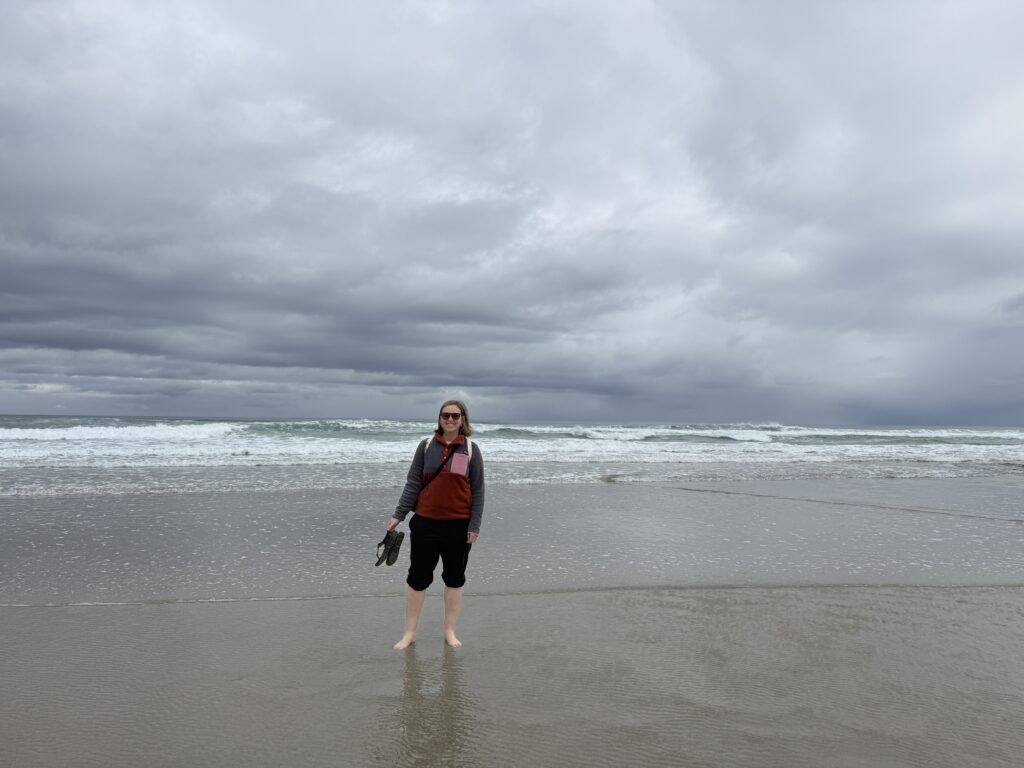
To get to different areas, visitors have to climb over precarious rock outcroppings. I had the thought that this would never be allowed in the US because there weren’t any safety rails or anything. I love that about non-US countries: it is enter at your own risk and don’t be dumb. Actually, instead of climbing up and over the rocks, at one point I just hiked up my pants and took off my shoes and walked through the ocean. Much safer and handy for me that I’m on the taller side.
Ribadeo
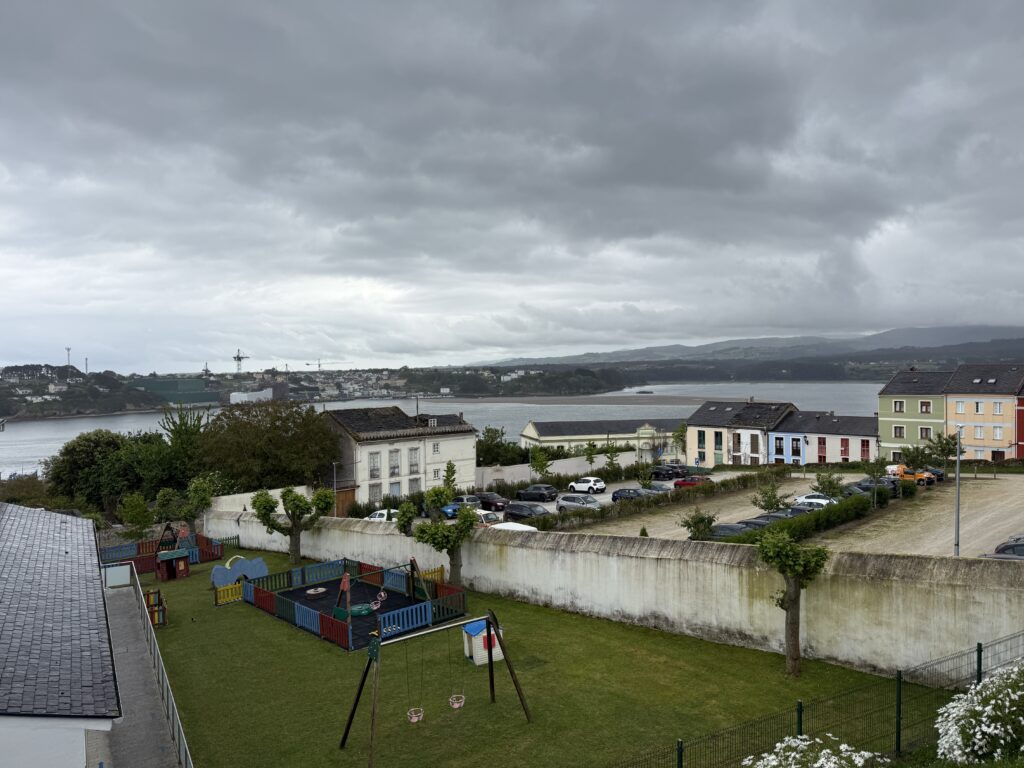
The town of Ribadeo made for stop number two. This town marks the border between Galicia and its neighbor ‘state’ of Asturias. The border is the River Eo. Get it? Ribadeo.
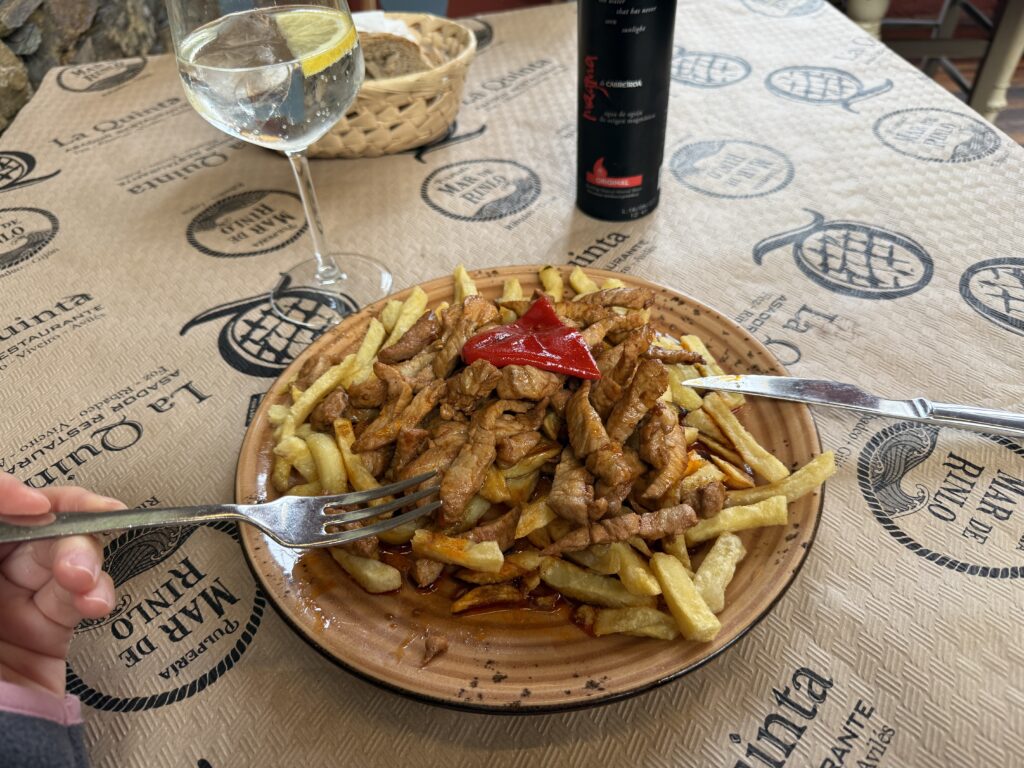
My main priority in this town was to eat and since 98% of the Galician cuisine is seafood (95% of the 98% being octopus) I decided to splurge and go to a barbecue type of place. With a hope and a prayer, I picked one of the three pork dishes. I am not entirely sure what I got, but meat and french fries always works for me.
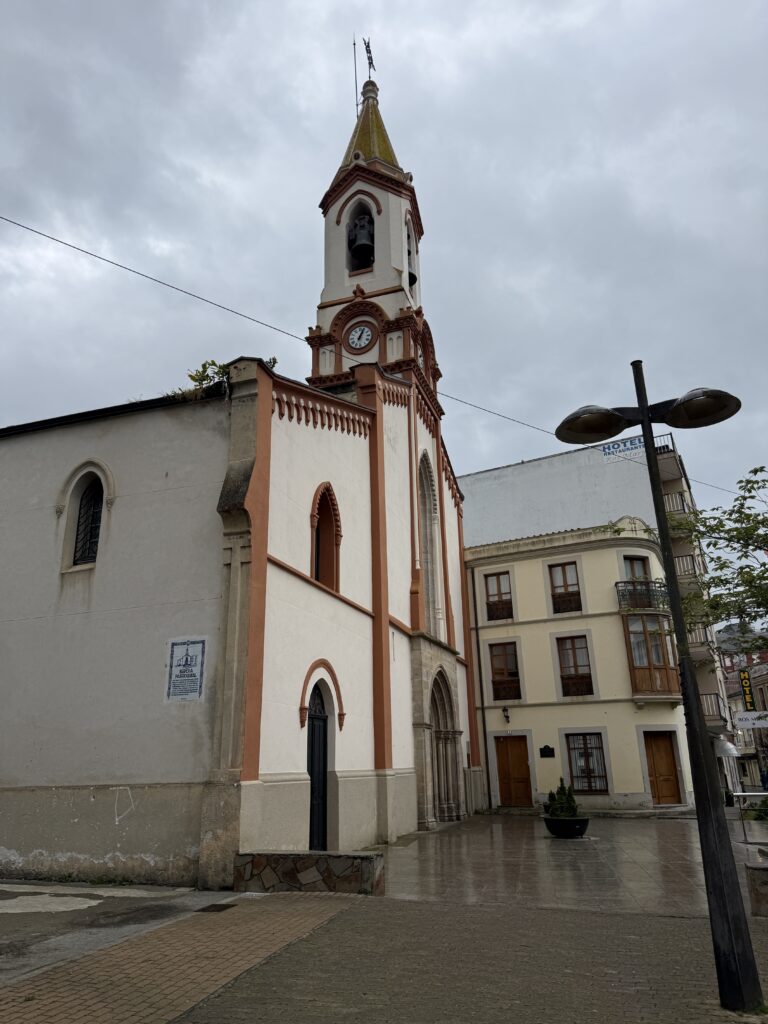
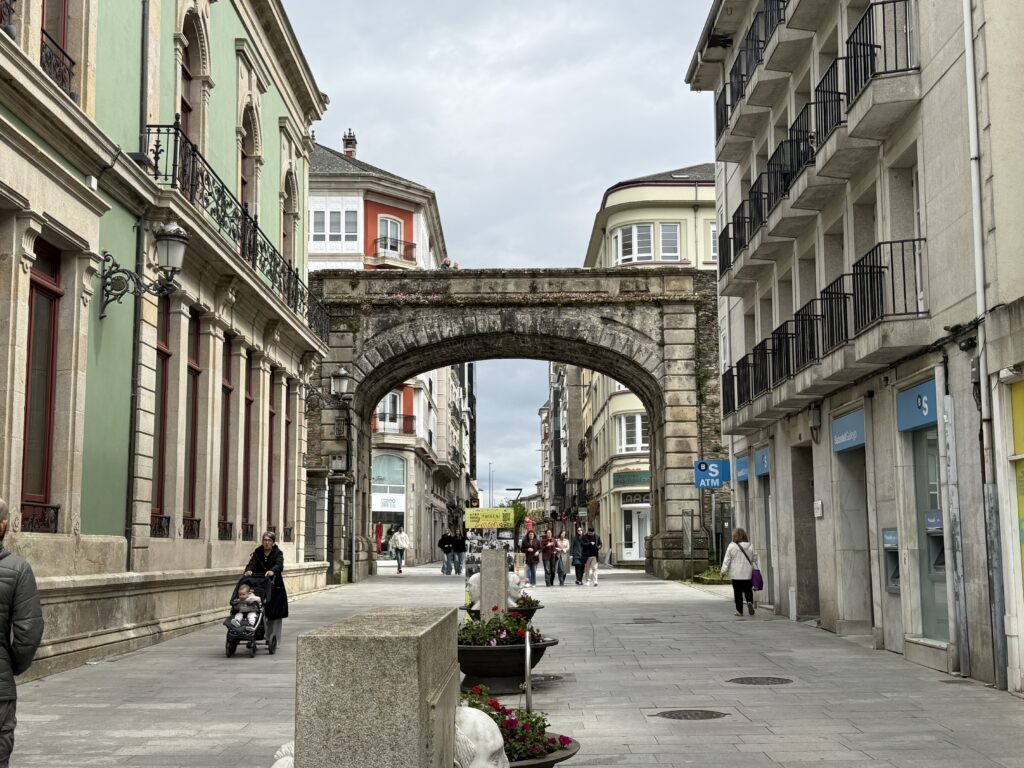
I learned that there were a ton of emigrants from Galicia in the 1800s and 1900s due to economic struggles. However, in a twist, after making their fortunes in different countries of the world, people came back home and began investing in their communities. This happened so much that these people got a nickname: indianos. The architecture around here is a hodge podge of styles from all over the world because when the indianos came back to Galicia they built in the styles of their adopted countries.
Lugo
The town of Lugo’s claim to fame is that it has the only intact Roman wall in Europe. I usually go nuts for medieval walls, so this blew my mind that it was around a millenia before those new fangled ones. I learned a lot on a tour of the town. Here are the key takeaways:
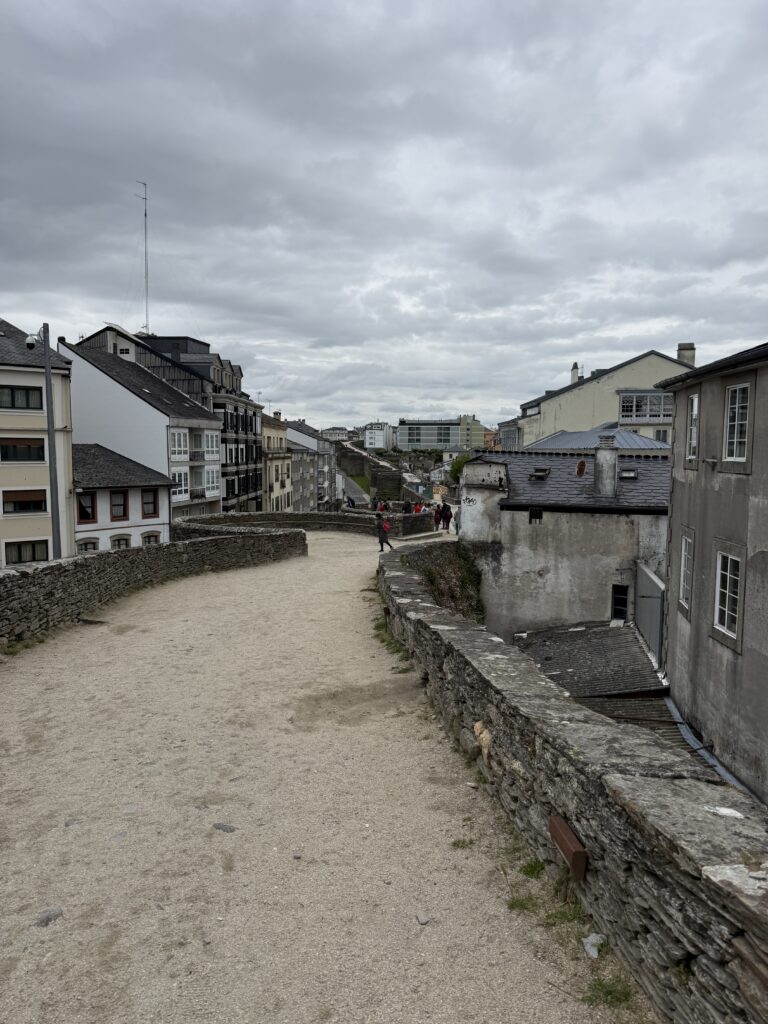
- Lots of famous Romans are mentioned with this town. There is a statue of Augustus because he was the one who got the ball rolling for this town to be started.
- Long after the wall was built the enterprising locals incorporated it into their houses. After all, why build a house with four walls when one wall already exists? This plan worked for several hundred years until city officials wanted to be able to show off the wall as a feature. They decided to let the houses stay that were on the inside of the wall, but to demo the ones connected to the outside to make some space for a good visual.
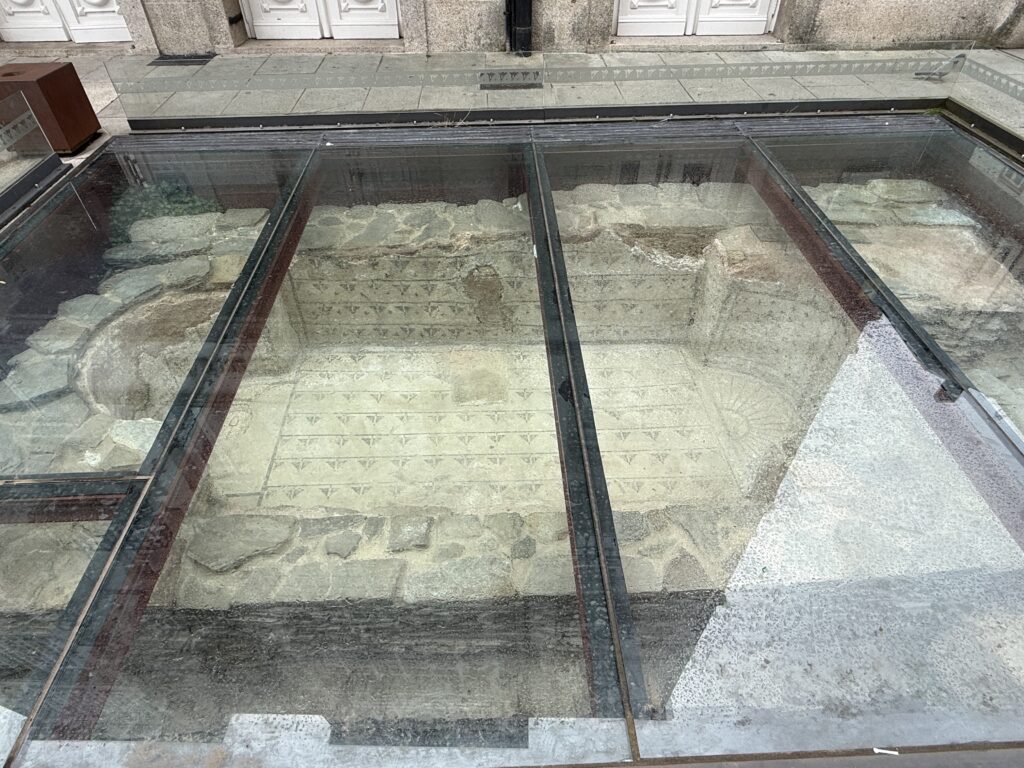
- It is super hard to build anything in Lugo because every time people dig for a foundation, they stumble upon some Roman ruins that have to be preserved. The city has covered several of these with see-through material so you can see what is happening underground. We saw a temple and a bathing pool. It makes me wonder how many people have Roman ruins in their basement that they didn’t tell anyone about because they wanted to be able to finish their home reno.
I really enjoyed walking along the ocean at Beach of the Cathedrals as well as learning about Galician history.


Leave a Reply