
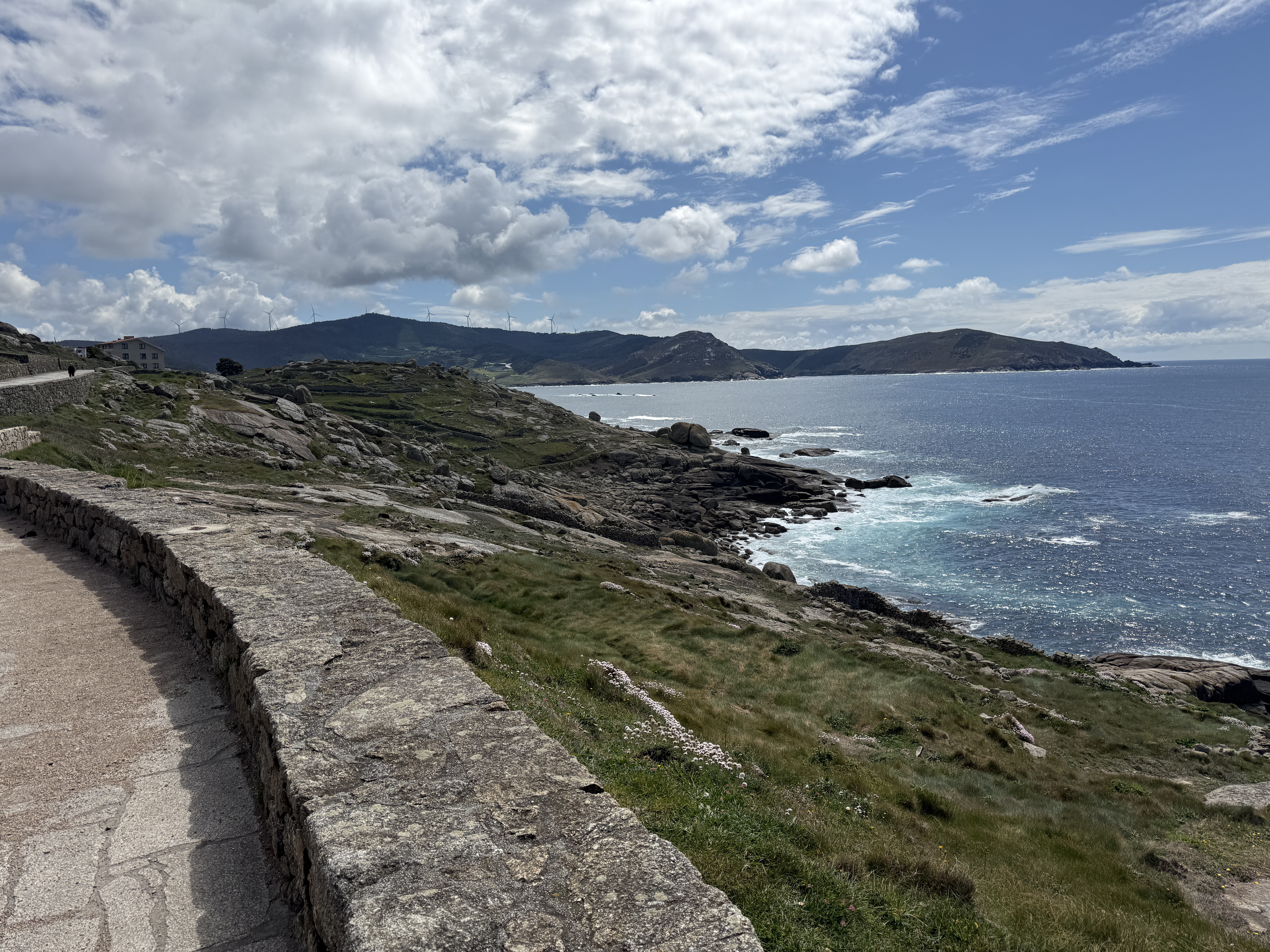
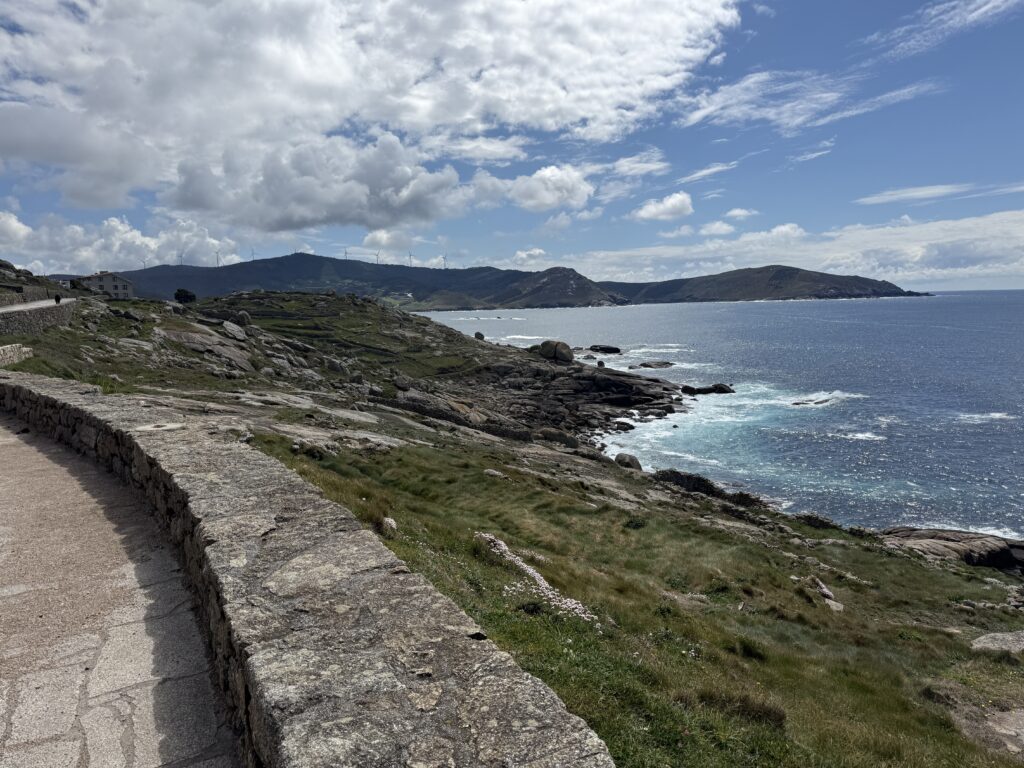
Galicia is in the northwest part of Spain. It is a mix of Spanish, Celtish (!), and Portuguese and rains a lot. Like a lot a lot. I didn’t know any of this before I randomly picked Santiago de Compostela as my home base in Spain for a month (super smart, right?). When I took a daytrip last weekend to the coast it was dreary when we left Santiago and when we returned, but I got some glorious sunshine near the ocean.
Contexto
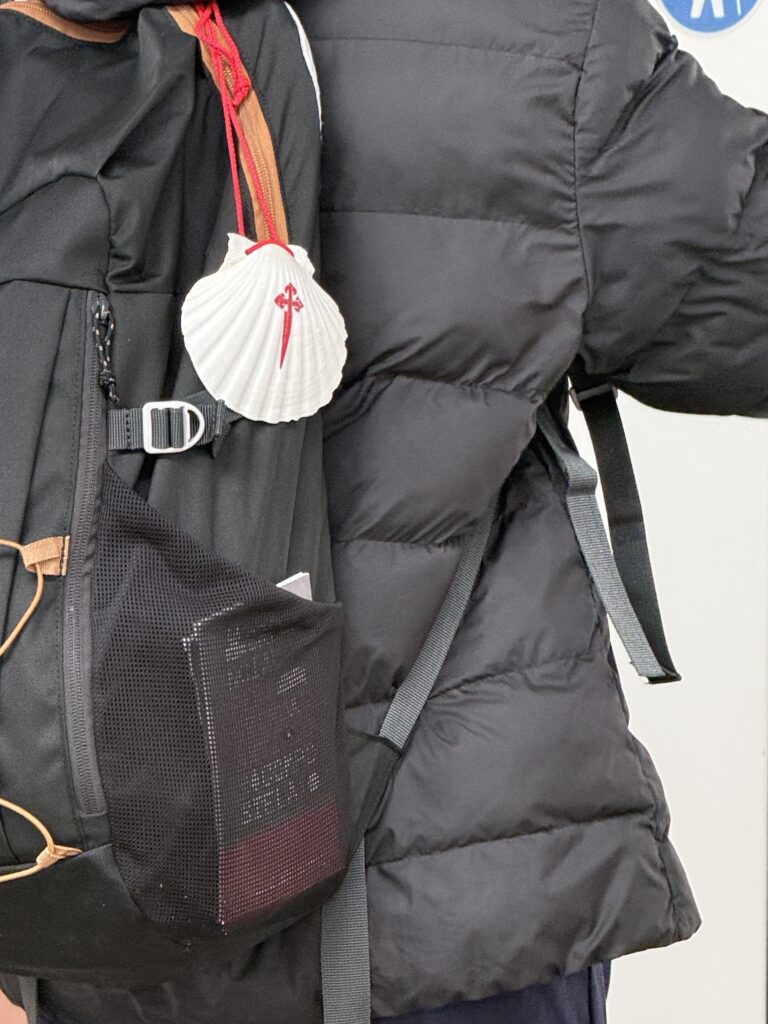
I’ve learned a ton about the Camino de Santiago, or just the Camino as everyone here calls it. Most caminos, because there are more than one, end in Santiago de Compostela. However, the real gung ho pilgrims hoof it all the way to the coast to Finisterre, which translates to ‘end of the world’ because that’s where the disciple James, AKA Santiago, was said to have gone. I took a tour and we visited not only Finisterre, but also other cute little towns in the area.
Here’s another interesting tidbit: in Galicia, they speak Spanish but also Galegos, which is kinda like a hybrid of Spanish and Portuguese. Thus, Finisterre and the Costa da Morte is also Fisterra and la Costa de la Muerte. If you don’t speak Galegos or Spanish and think the term morte/muerte looks an awful lot like mortician, you’d be correct. The coast is so named because it is tricky to navigate and has become the final resting place for many a sailor throughout the millennia.
First stops
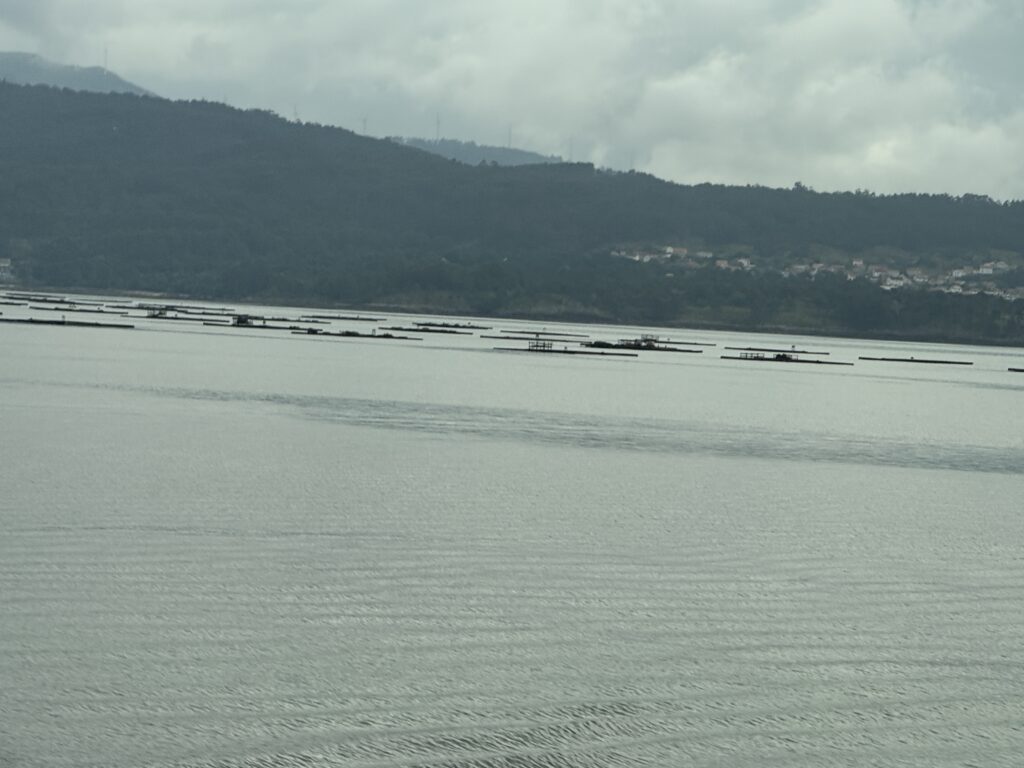
We started our tour in a cute town called Muros. As you can imagine, seafood is big business in these parts. This picture isn’t great, but fisherpeople put these wood platforms in the ocean and string ropes down to the sea floor. Different types of creatures make their homes on the ropes and then end up in the stew pot when they are unceremoniously pulled out of the ocean (cue Les Poissons on The Little Mermaid soundtrack).
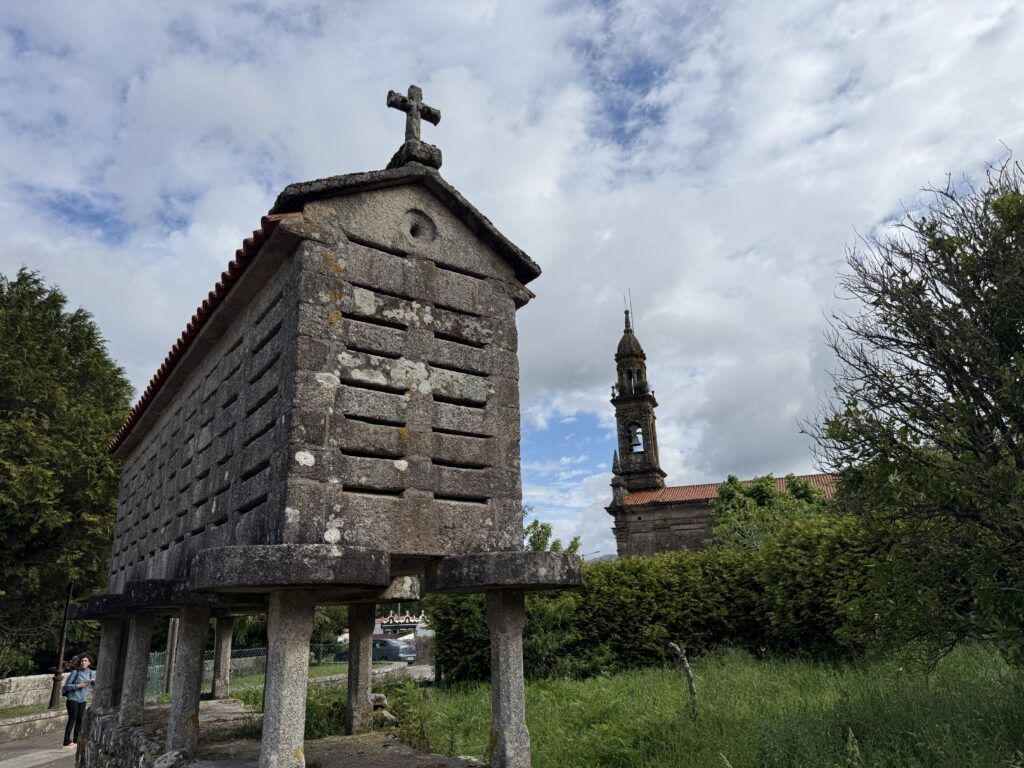
On the drive, I had noticed strange stone structures by the houses. These reminded me a bit of the above-ground tombs in New Orleans, but I didn’t know what they were. My tour guide filled me in: these are horreos, or granaries. People would put their corn, vegetables, etc. in them and the slots for air would keep the goods fresh, but they were narrow enough that rodents couldn’t get in and eat their food. Nowadays, people just use refrigerators and cabinets, but the horreos are culturally protected so no one can take them down. I’m glad, they totally added ambience.
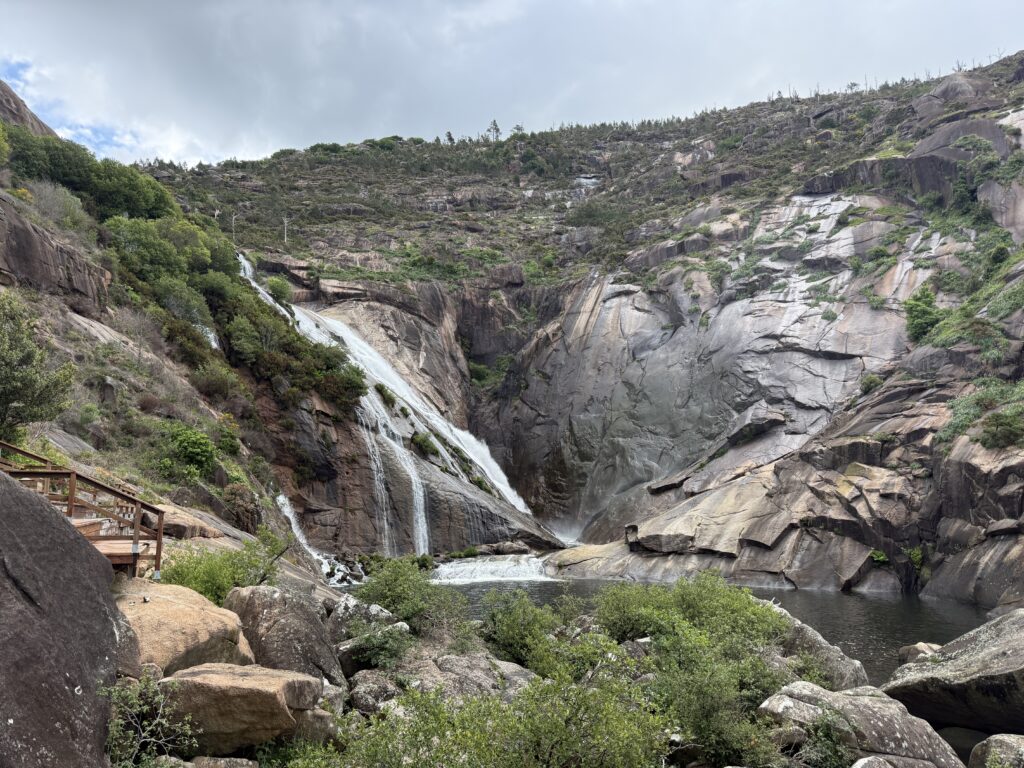
The next stop was Fervenza de Ezaro. The Ezaro is a river that ends dramatically with a waterfall into the ocean. It wasn’t the most impressive waterfall I’ve seen, but it is cool to think of a whole river ending like that.
The End of the World
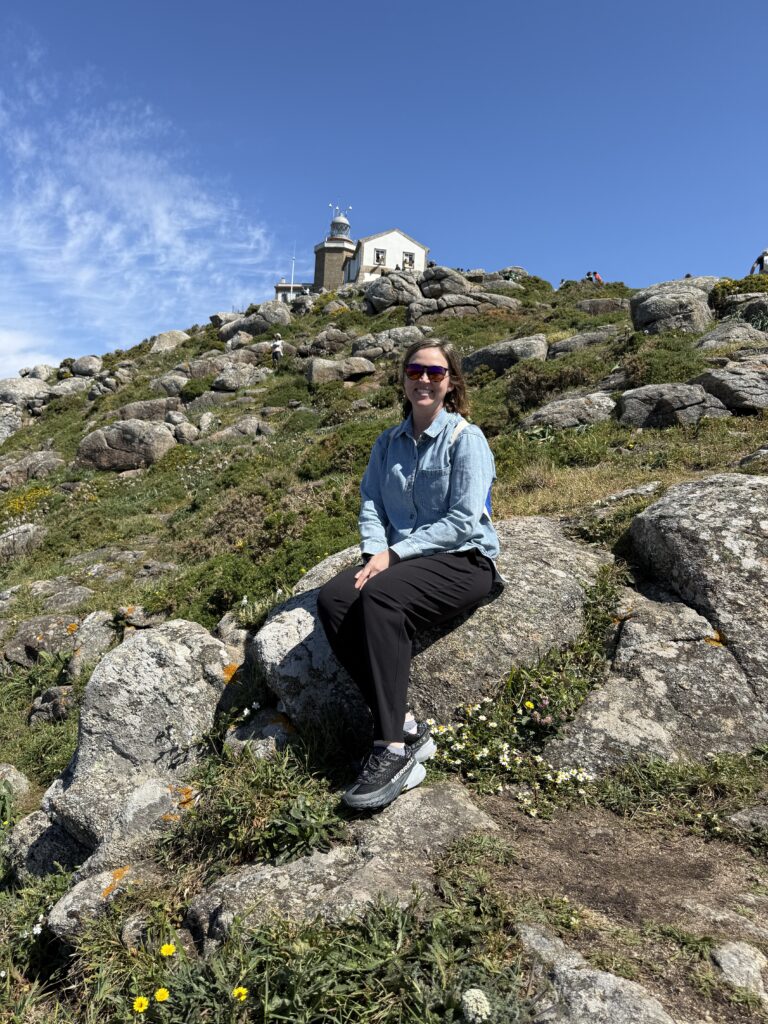
Finisterre/Fisterra dominated the next three stops. We went to the official lookout and I soaked up the sun beneath a lighthouse. We ate lunch in the little town of Faro de Finisterre and then went to the Sanctuary of Virxe da Barca.
The landscape here looked surprisingly like the coast of Nova Scotia. There were two really big rocks that have legends attached to them. For one, if you crawled through the holes of it a certain number of times you would be healed from back problems. It seemed to me crawling through the holes would give me back problems, so I passed. On a different stone, people jump together to test their innocence. Pilgrims believe these two stones are part of a stone ship that James (or sometimes Mary) arrived on in Spain.
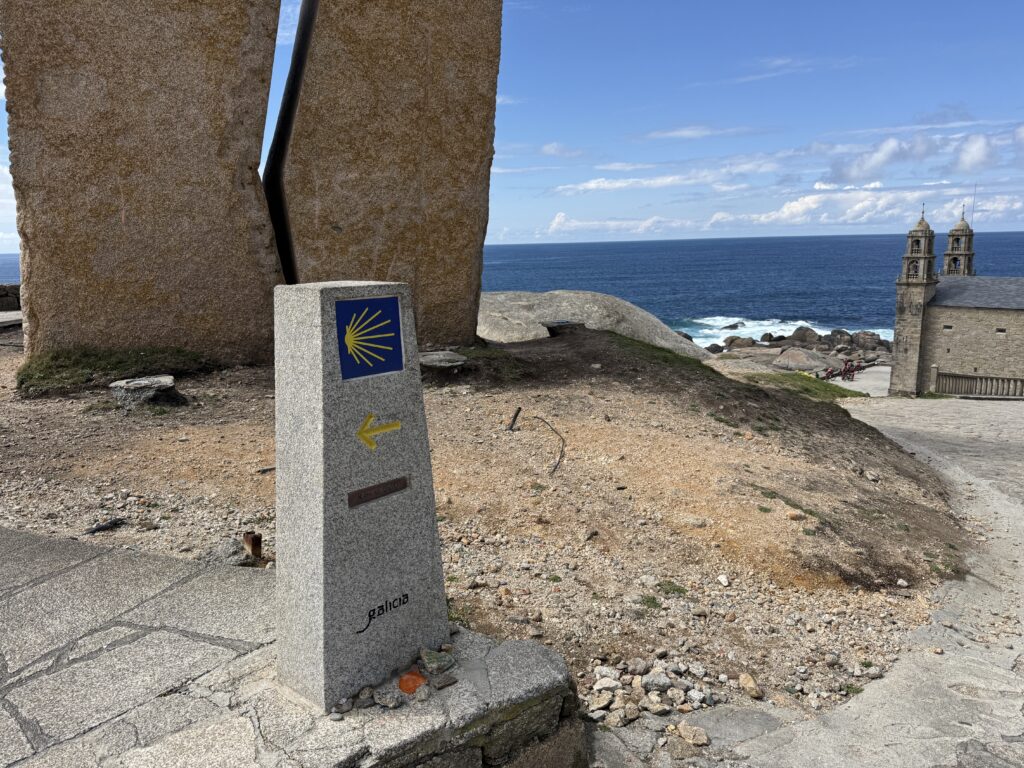
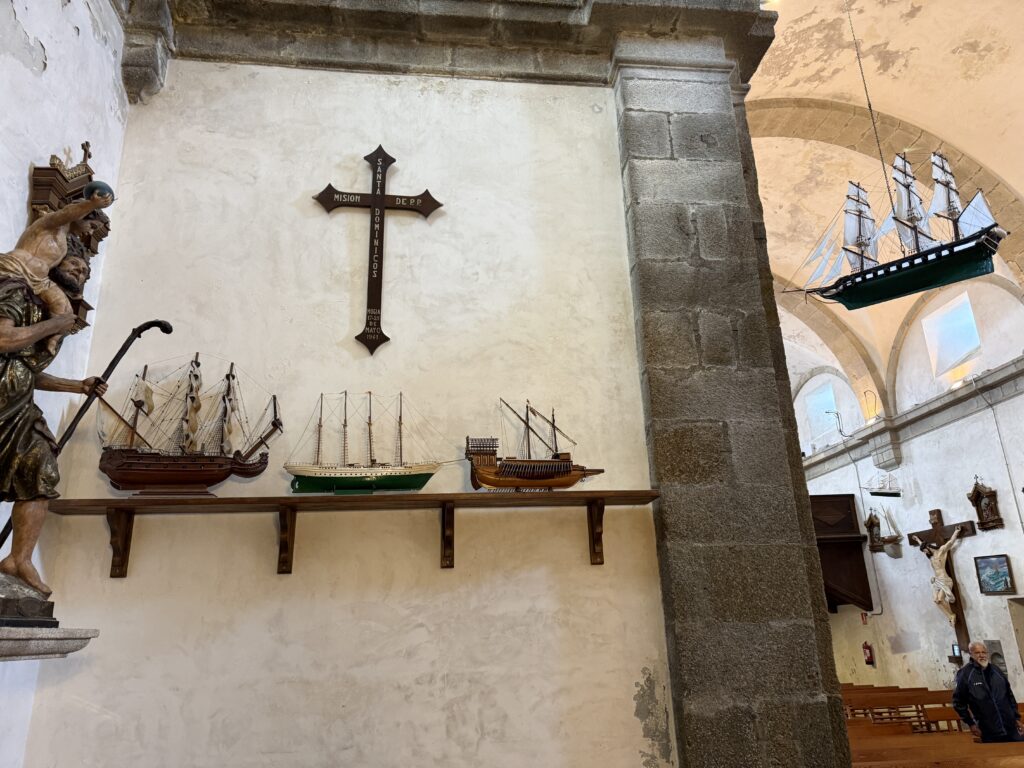
Do you see the blue sign with the yellow seashell? That is the symbol of the camino and marks the trail for the pilgrims. The church next to the coast was the most nautical one I had ever seen.
Bonus Bridge
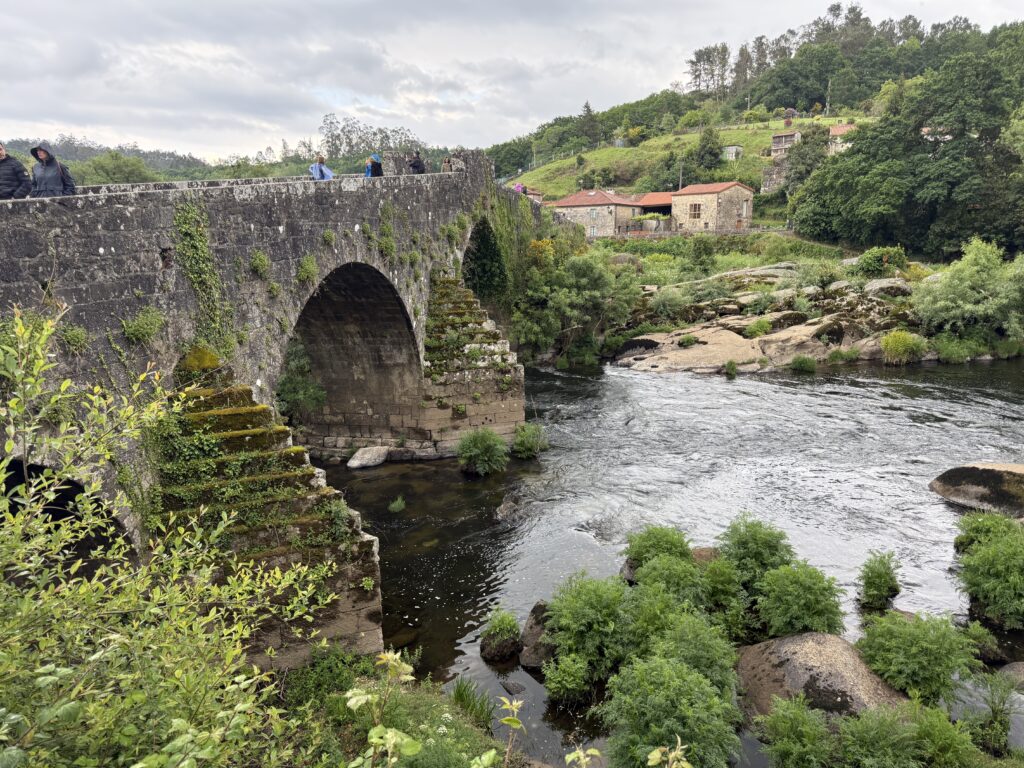
On our way back to Santiago, we popped by Pontemaceira. This bridge was originally built by Romans. The legend goes that James/Santiago was being chased by baddies and crossed the bridge. After he made it across, it fell down and he got away. It was later rebuilt in the 13th or 14th century and has stood ever since. This bridge is extremely picturesque and the little cluster of houses next to it is frequently named as one of the most beautiful places in Spain. It was very charming. At this point we were close enough to Santiago de Compestela that the rain started again.
I really enjoyed my trip to the end of the world and seeing all of the beautiful stops. No matter the reasons pilgrims do the Camino, they could hardly have chosen a prettier route.


Leave a Reply