
B and I parted ways in Tirana’s airport as we had separate flights to Sarajevo, Bosnia and Herzogovina. I was originally planning to avoid the Schengen Zone to not burn up one of my days on a layover, but after forgetting this plan I bought a flight through Rome. To get around having to go collect my luggage and go through passport control, we checked my bag on B’s flight through Austria. This worked great except the Tirana airport is really weird and you have to pay for a checked bag at a separate line than the bag check in. The new line person had to phone the airline to find out how much it would cost. Bonkers, right? This is a major block in their process flow efficiency and B was not impressed. It isn’t just Albania, the same thing happened to my brother in Istanbul.
Arrival
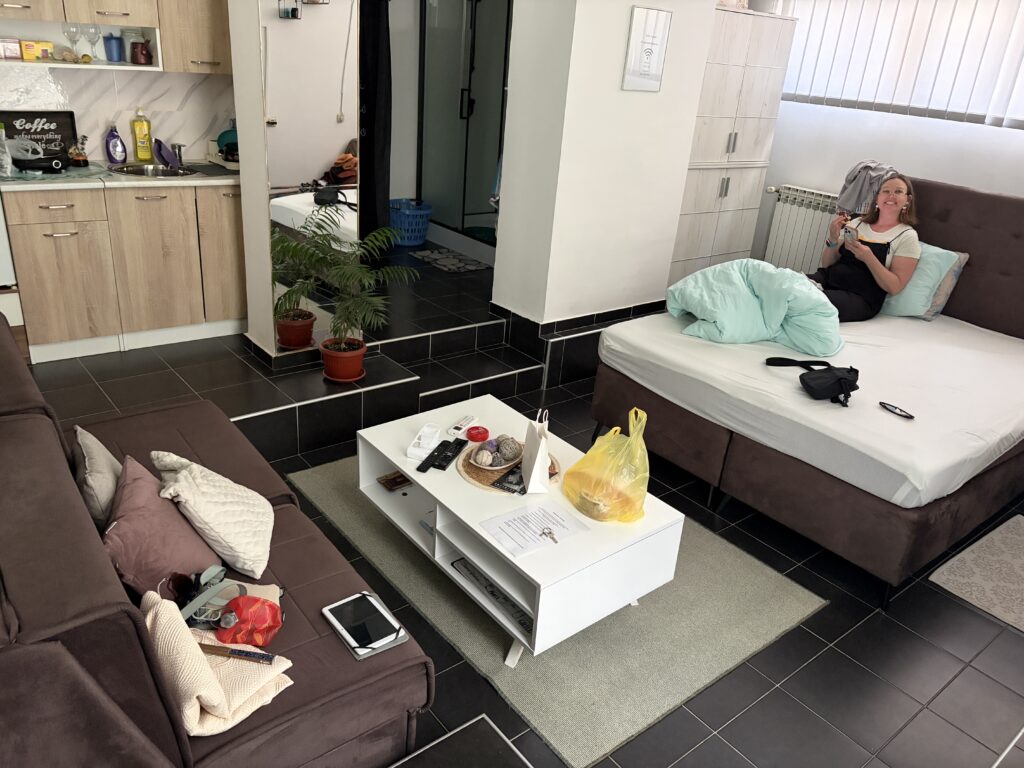
Our apartment turned out to be a weird one, which makes sense because it was pretty cheap. The floor had at least seven different levels in places; from an accessibility standpoint it was a nightmare! But it was centrally located and worked for us.
We wanted to go straight to the train station to pick up tickets for our train to Mostar in two days. We headed out without checking the weather or the hours of the train station. When the rain started, we huddled under a roof and realized that while we were halfway to the train station, it had closed half an hour ago. Oopsies! So instead we ran through the rain to a smash burger restaurant and got some dinner.
Bosnian War
Most of the places we visited in Bosnia had an overlay of the war. I wasn’t old enough to really understand what was happening in the 90s during the war here. After visiting the area and learning from the museums and tour guides, my takeaway is that humans can be shockingly horrible to each other. I don’t understand how people who have lived as neighbors their whole lives can one day wake up and decide, oh wait, that guy who I grew up playing with is actually a really bad guy and I should probably kill him. ☹️
Downtown Sarajevo
The main places we wanted to see were roughly in line stretching about a mile and a half. Here are the highlights.
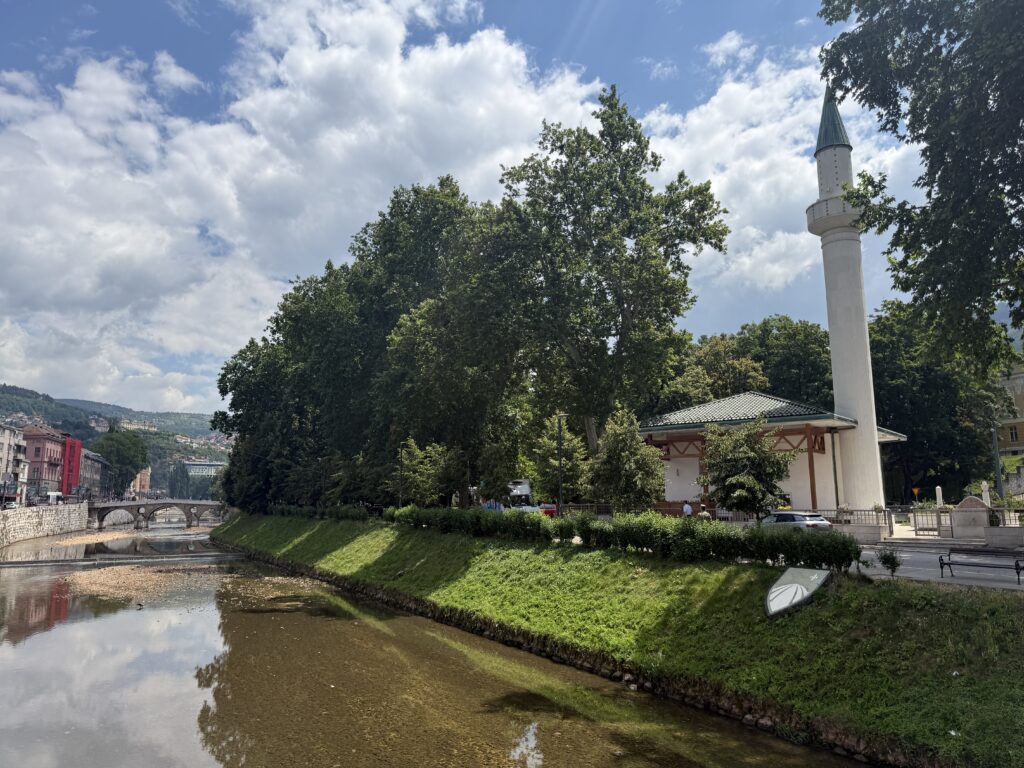
- Sarajevo is called the place where east meets west and it surely is. You can see this quite clearly on one main road. One part of town is very Ottoman with architecture you’d see in Istanbul with mosques and fountains, etc. Then the street turns into Austro-Hungarian style with tall stucco buildings that look like Vienna. It was very abrupt.
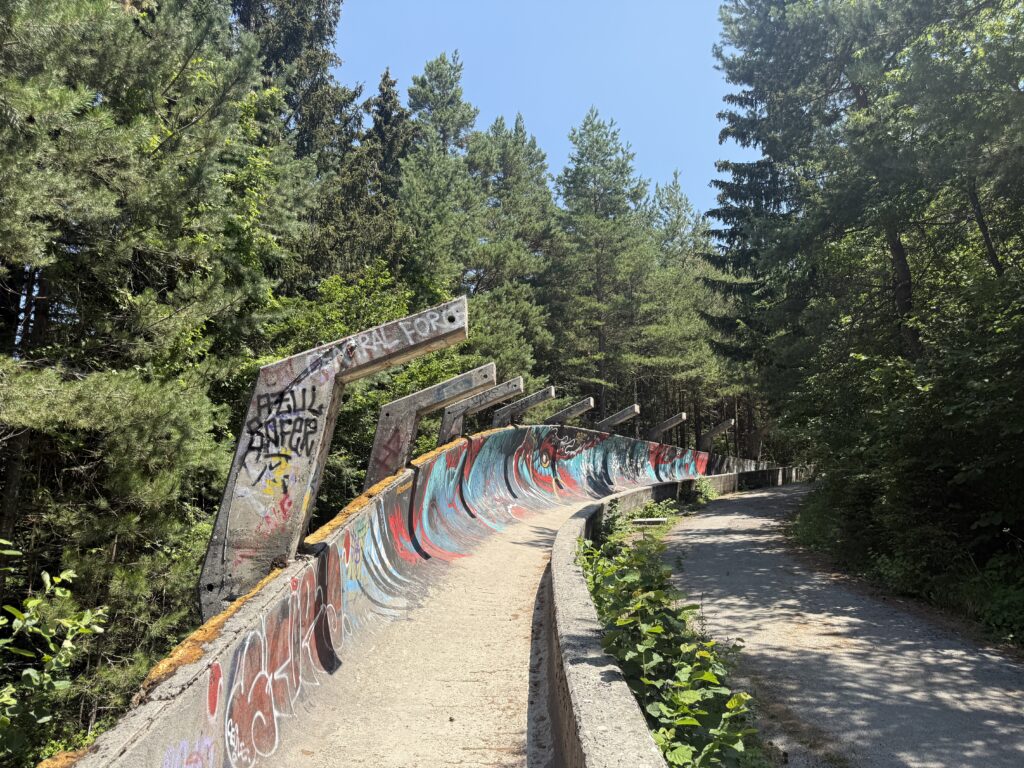
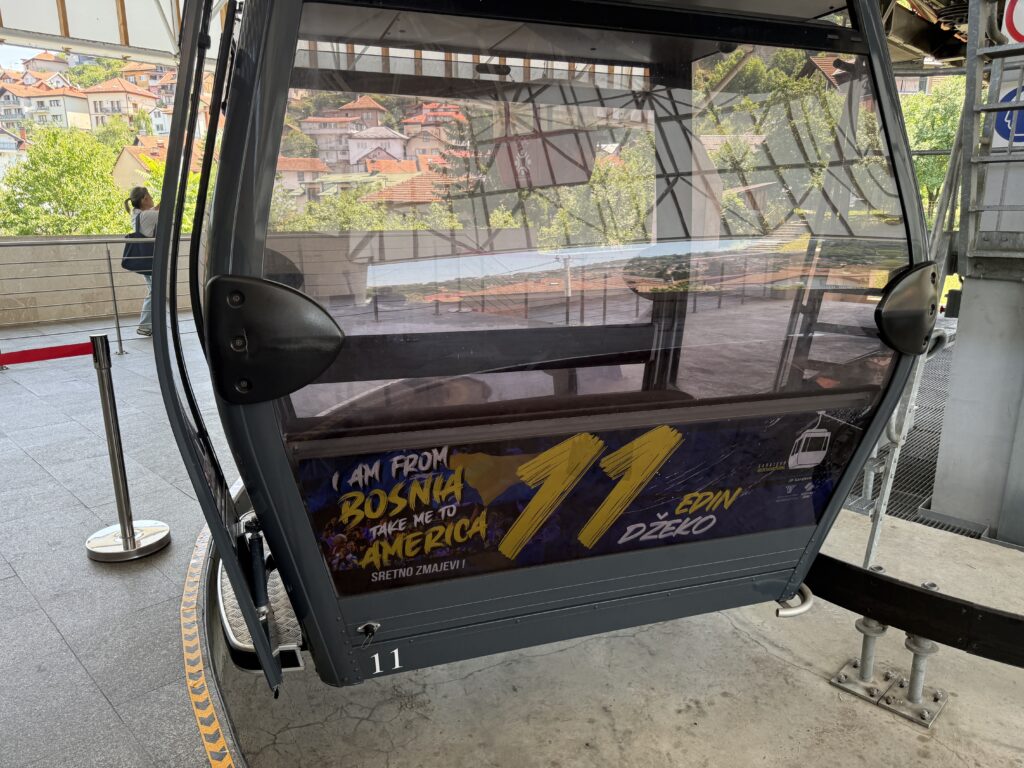
- The 1984 winter Olympics took place here. We heard a story that they made a bid to be the host city, not really thinking they would get it. When they did, they were a little panicked and had to do a lot to pull it off. One thing they built was a bobsled course on a hill outside the city. B and I took a gondola ride up the mountain and walked through the woods to see the remaining cement track. It was cool and a little eery to see how nature was taking the land back.
- Srebrenica Museum: B took a hard pass on this one, but the history degree holder in me really wanted to learn more about the horrible genocide that happened here. This museum was sobering and devastating and not something I’ll soon forget.
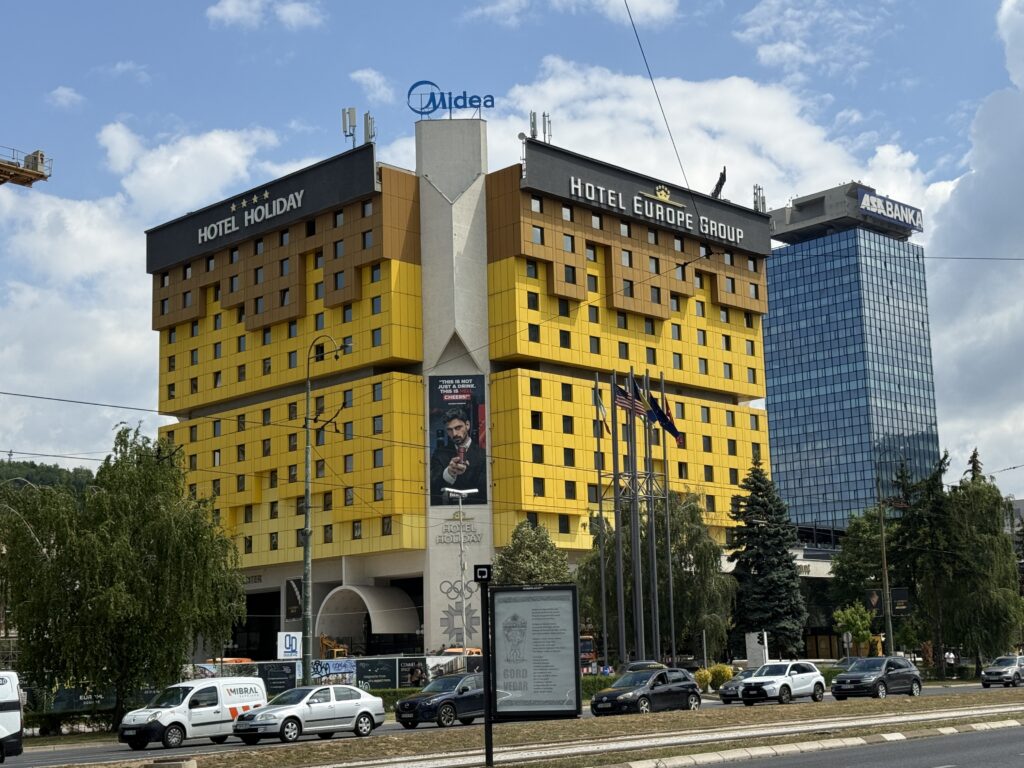
- Sniper Alley: during the war, Sarajevo was under siege. We walked the stretch of road where snipers would try to shoot civilians who were trying to get through. The yellow Hotel Holiday is still there; this was the building where the foreign war correspondents could report on what was happening.
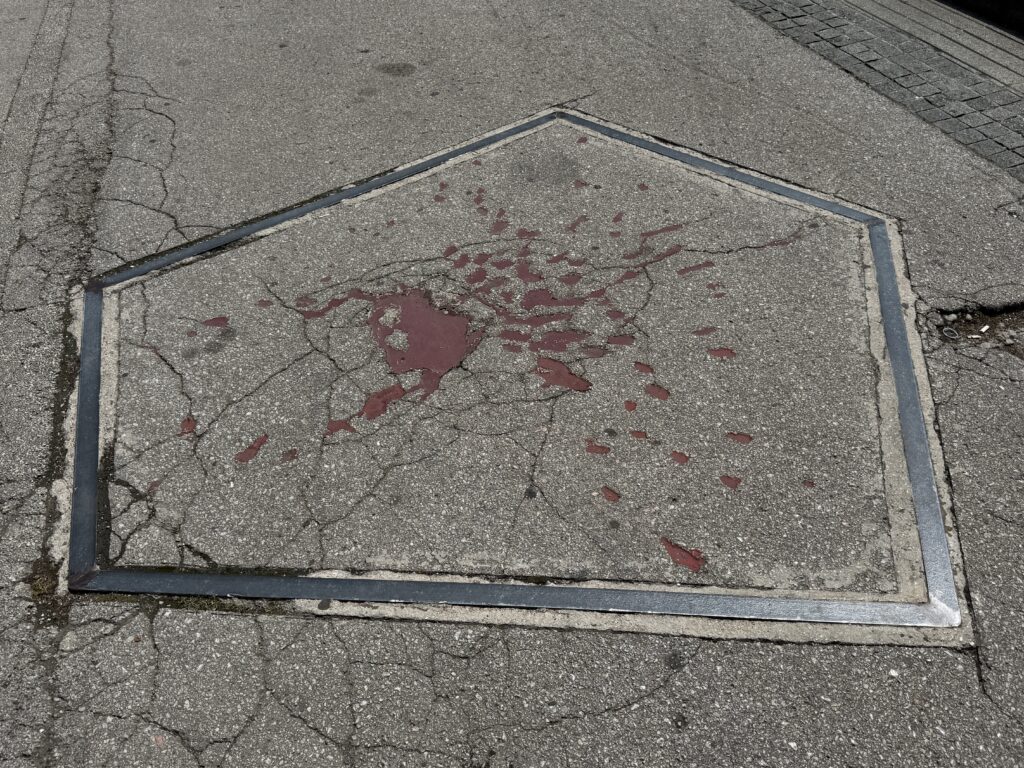
- Sarajevo roses: when shrapnel hit the concrete roads, it left divots. After the war, the citizens filled the holes with red resin, making ‘roses’ that marked the areas.
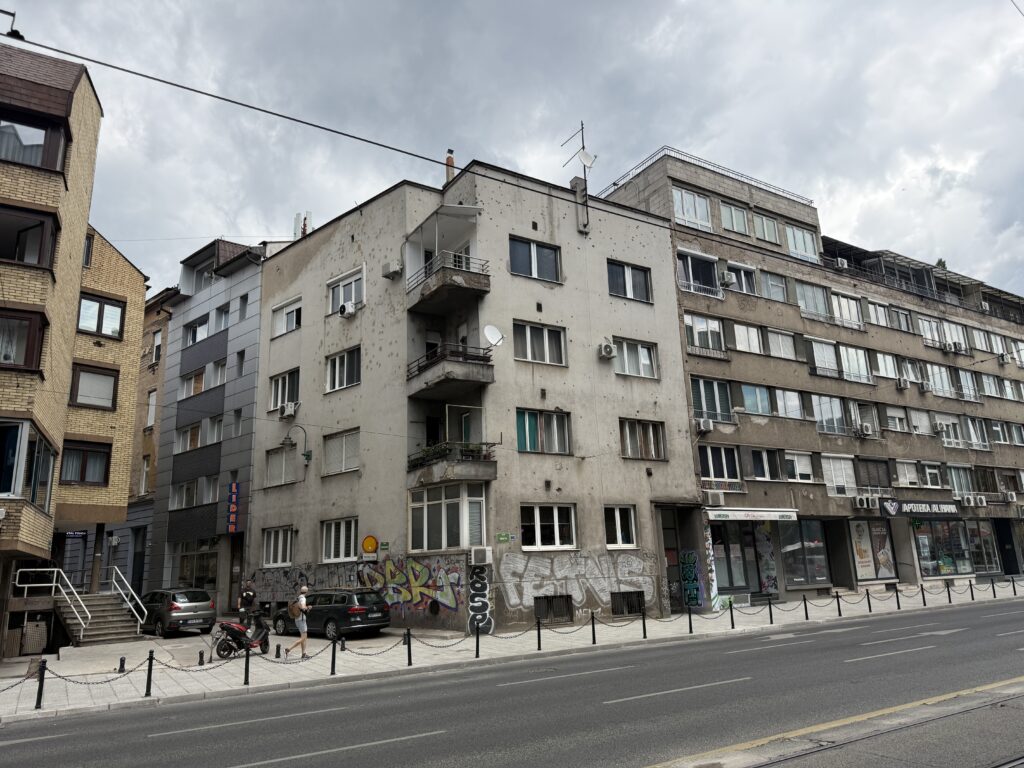
- Shrapnel/artillery rounds/bullet holes: most buildings have been fixed up since the war ended, but there are many that still show the toll the war took.
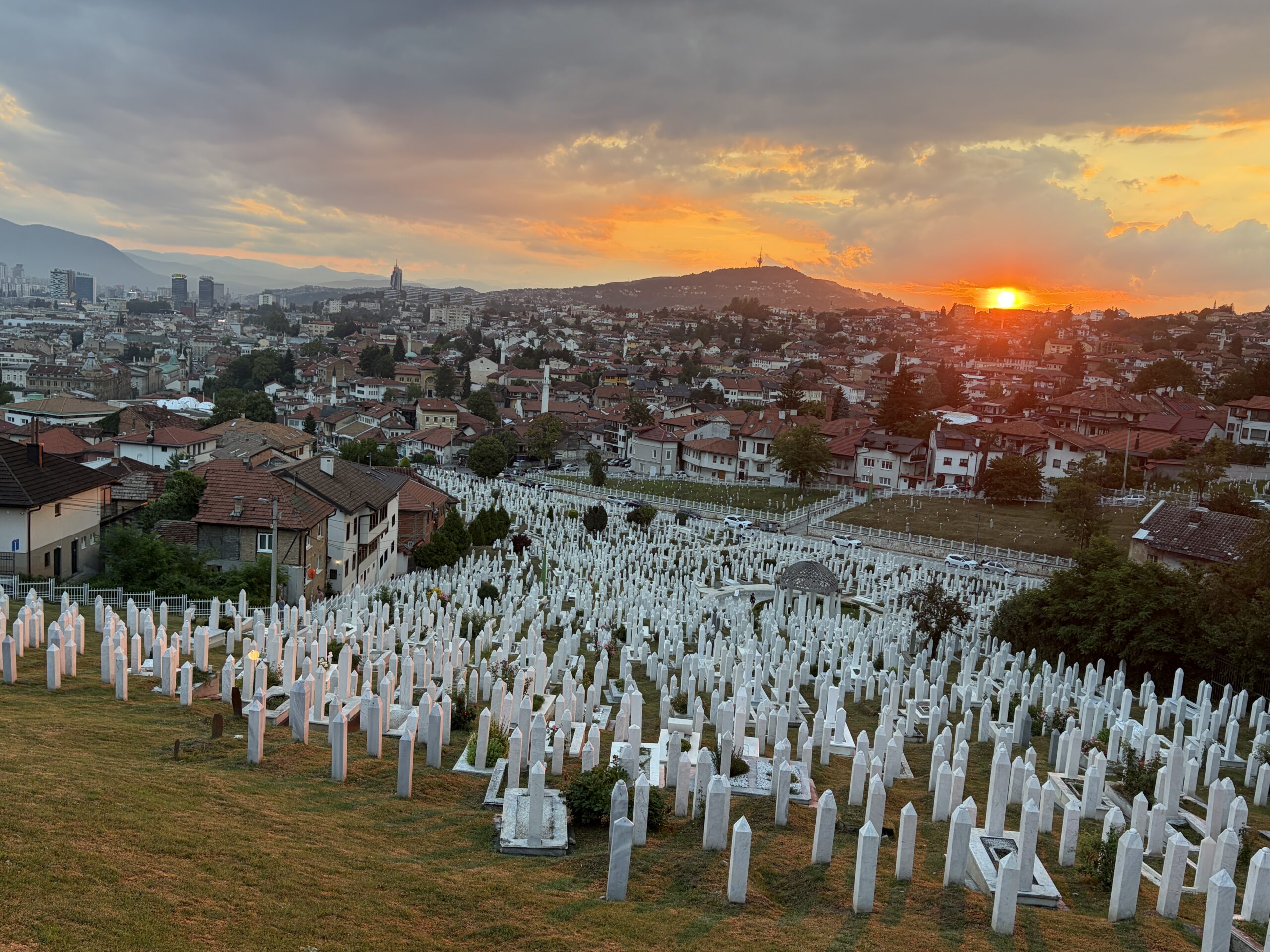
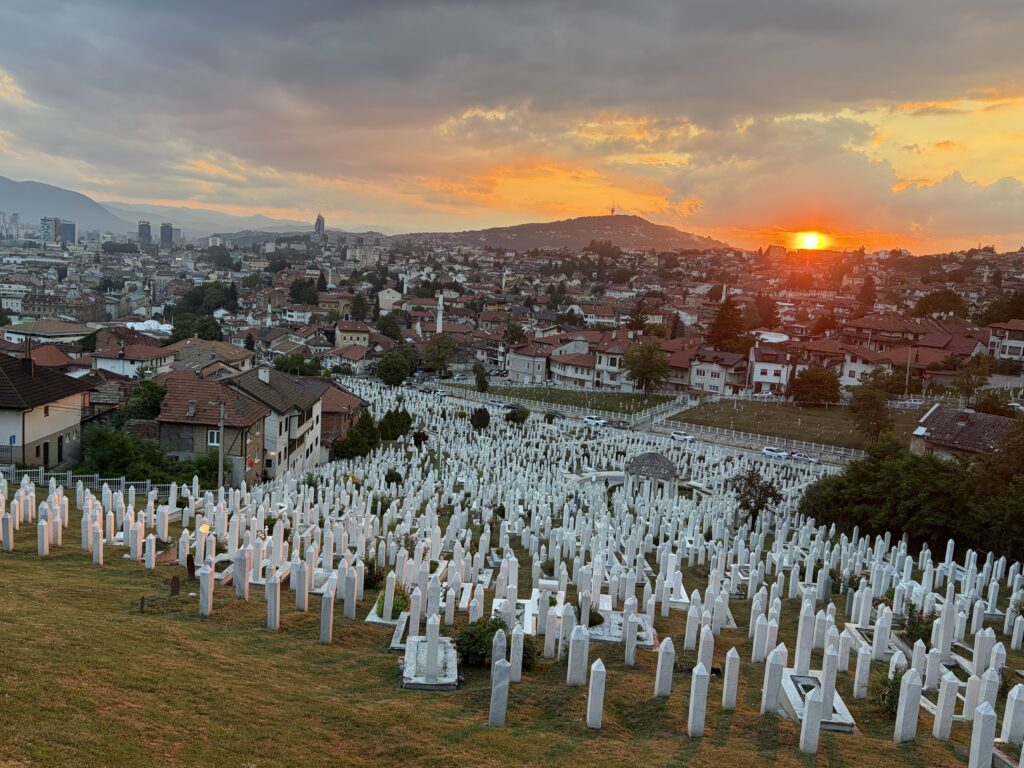
- There are several cemeteries in Sarajevo that are full of people who died in the 90s. This is because during the siege, so many people were dying and it wasn’t safe to leave town to go to the existing cemeteries so they had to make new ones that were closer.
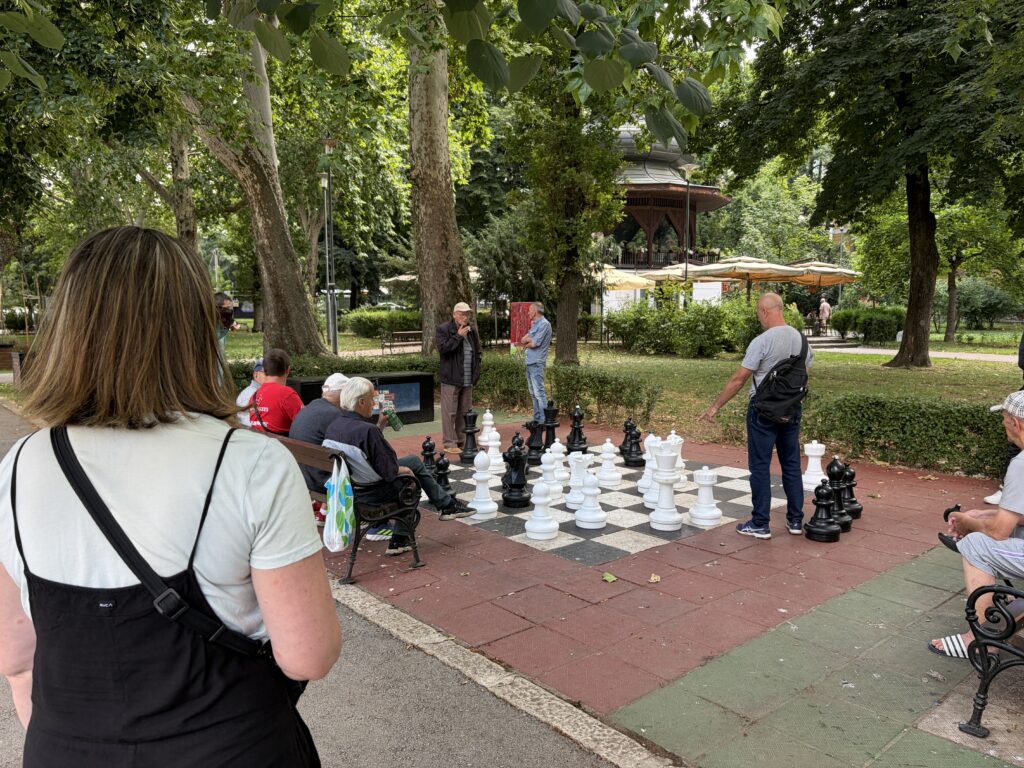
- Sarajevo follows the proud tradition of most other European cities I’ve been to where during the day, old men can be found sitting on park benches playing chess.
Sarajevo summary
I liked this city. It has been through a lot and I appreciate that they aren’t trying to hide the darker memories. I learned from a guide that presently schools are segregated by religion, so I am a little afraid for the future if those kids grow up without making friends that don’t look/act/believe like them. Although…I suppose that is true for everywhere.
Leave a Reply